

-
info@Metroprotective.ca
Send Email
-
Toronto – Hamilton – London – Windsor
Metro Protective Services
Tel: 416-240-0911
Confidentiality Guaranteed
Tel: 416-240-0911
Confidentiality Guaranteed
04
Sep
Sep
Comprehensive Security Guard and Property Protection Services in Toronto and the GTA
Breadcrumbs: Home › Blog › Security Guard Services › Property Protection
Published: Friday, September 4, 2026
Category: Security Guard Services Toronto
Tags: Security Guard Services Toronto, Construction Site Security Services, Property Protection, Mobile Patrol Services Toronto, Concierge Security Services, Residential Security Toronto, Electronic Reporting
For property managers, business owners, and facility operators, security is most effective when it is structured as a complete property protection program rather than a single isolated service. A guard at an entrance may be necessary, but the right solution may also require scheduled patrols, trained supervisors, 24/7 dispatch coordination, access-control procedures, and reliable electronic reporting.
The central question is not simply whether a property needs a security guard. It is how much coverage is required, where it should be positioned, what responsibilities should be assigned, and how performance will be verified.
Metro Protective Services has served Toronto and the GTA since 2000, providing professional security guard services, mobile patrol, dispatch coordination, concierge security services, loss prevention, and industrial protection. This guide outlines the main coverage models and the practical criteria to consider when selecting a provider.
Start With a Property-Specific Risk Assessment
A security program should reflect the property’s layout, operating hours, occupancy, assets, and known risks. A high-rise residential building, construction site, warehouse, retail plaza, and office complex will not require identical procedures.
A provider should review:
- Entry and exit points
- Parking areas, loading zones, and perimeter access
- Lighting, fencing, gates, and vulnerable building sections
- Operating hours and shift changes
- Valuable equipment, inventory, or materials
- Tenant, employee, visitor, and contractor access
- Existing cameras, alarms, intercoms, and access-control systems
- Previous incidents, trespassing concerns, theft, vandalism, or unauthorized access
- The need for emergency response, fire watch, or after-hours coverage
Properties located near shelters, drug rehabilitation facilities, or supervised consumption and injection sites may require additional planning based on documented site conditions. This does not mean treating nearby residents or service users as threats. It means developing professional procedures for trespassing, unauthorized entry, loitering, medical emergencies, conflict, and emergency escalation while emphasizing respectful communication and de-escalation.
A qualified security provider should be able to explain the reasoning behind its recommended staffing model instead of offering a generic number of guards.

Understand the Three Main Coverage Models
Most property protection programs use one of three models: dedicated on-site security, mobile patrol, or a hybrid combination.
1. Dedicated On-Site Security Guards
Dedicated guards remain at the property for an assigned shift. This model is appropriate when a continuous physical presence is required or when the guard has ongoing operational responsibilities.
Typical duties may include:
- Monitoring entrances and exits
- Verifying identification, credentials, or visitor authorization
- Controlling contractor and delivery access
- Conducting scheduled interior and exterior patrols
- Monitoring cameras and alarm panels where applicable
- Maintaining visitor, key, and incident logs
- Responding to disturbances, safety concerns, or unauthorized access
- Supporting emergency procedures and contacting emergency services when necessary
- Protecting employees, tenants, visitors, equipment, inventory, and other assets
On-site guards can also support concierge security services in residential and commercial settings. These assignments may include reception coverage, delivery coordination, resident assistance, and building monitoring. The security responsibilities should remain clearly defined so that customer-service duties do not prevent the guard from completing required patrols and security checks.
Dedicated coverage is often suitable for high-traffic properties, facilities with controlled access requirements, buildings with recurring incidents, and sites where a visible deterrent is necessary throughout the day or night.
2. Mobile Patrol Services
Mobile patrol services Toronto clients use are designed for scheduled or unscheduled site visits rather than continuous staffing. A marked patrol vehicle and uniformed officer provide a visible deterrent while allowing one patrol unit to monitor multiple locations.
Mobile patrol may include:
- Perimeter and building inspections
- Lock and unlock services
- Alarm response
- Parking enforcement
- Gate and access-point checks
- Construction site inspections
- Vacant-property checks
- Key management
- Lighting and fencing observations
- Documentation of damage, hazards, or suspicious activity
This model is useful for properties that do not require a permanent guard but still need regular physical verification. It can also provide after-hours coverage for commercial properties, industrial facilities, parking areas, and vacant buildings.
Mobile patrol is not automatically equivalent to continuous security. Property managers should confirm the frequency of visits, whether routes are scheduled or randomized, how missed visits are handled, and how urgent incidents are escalated.
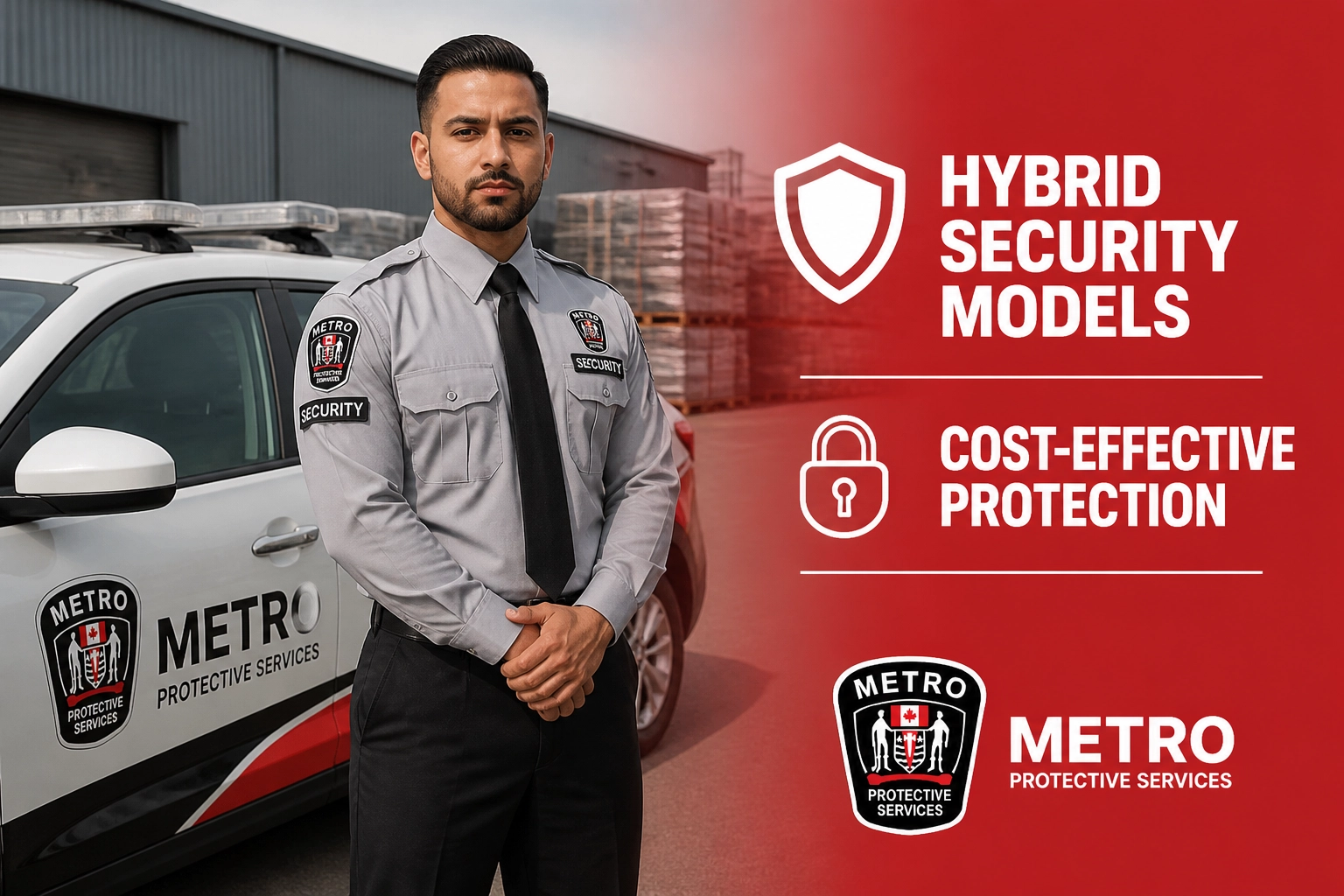
3. Hybrid Security Coverage
A hybrid model combines dedicated guards with mobile patrol and supervisory support. For many Toronto and GTA properties, this provides a more balanced structure.
For example, a property may use:
- A dedicated guard during peak operating hours
- Mobile patrol overnight
- Supervisor inspections during each shift
- Additional patrols during weekends or high-risk periods
- Dispatch coordination for alarms and urgent requests
- Electronic GPS check-ins and daily reporting
Hybrid coverage can be particularly effective for construction projects, industrial sites, retail plazas, multi-building residential properties, and commercial facilities with changing risk levels. It provides a consistent on-site presence while extending coverage beyond the guard’s assigned post.

Define the Guard’s Role and Responsibilities
A professional guard should receive written post orders that explain what must be done, when it must be done, and who must be notified. Vague instructions create inconsistent service and make performance difficult to evaluate.
Post orders should address:
- Access control: Who may enter, what identification is required, and how exceptions are approved.
- Patrol requirements: Which areas must be checked, at what intervals, and what conditions require immediate reporting.
- Incident response: How guards respond to theft, trespassing, aggressive behaviour, fire alarms, medical events, or property damage.
- Communication: Who receives reports, how dispatch is contacted, and when emergency services are called.
- Documentation: What information must be recorded, including time, location, observations, actions taken, and follow-up requirements.
- Professional conduct: Expectations regarding appearance, confidentiality, respectful communication, and appropriate use of authority.
Guards should also understand the limits of their role. Private security personnel support safety, protect property, observe and report, control access where authorized, and follow established procedures. They do not replace police, fire, medical, or social-service professionals.
What to Look for in a Security Provider
When comparing security guard services Toronto providers, price should be only one part of the evaluation. A lower hourly rate may not represent good value if the provider cannot maintain staffing, supervision, dispatch support, or accurate reporting.
Licensing, Insurance, and Compliance
Confirm that the company and assigned guards meet applicable Ontario licensing requirements. Ask for documentation of corporate licensing, guard licensing, insurance, and other required workplace or regulatory documentation.
Metro Protective Services is fully insured, bonded, and licensed by the Ministry of the Solicitor General. Its guards are experienced, trained, and uniformed.
Training and Site-Specific Preparation
Ask what training guards receive beyond basic licensing requirements. Relevant preparation may include:
- Access control and visitor management
- Report writing
- De-escalation and conflict management
- Emergency response
- First aid
- Fire watch procedures
- Loss prevention
- Construction site safety
- Workplace communication
- Residential and commercial property procedures
Training should be supported by site orientation and written post orders. A guard who understands the property is better positioned to recognize unusual activity and follow the correct escalation process.
Active Supervision
A provider should have a process for checking guard performance. Ask how often supervisors visit, whether inspections are documented, and how staffing issues are addressed.
Metro Protective Services uses mobile supervisors to conduct site visits and support guards in the field. Supervisory oversight helps identify missed patrols, incomplete reports, equipment concerns, and changing site conditions.
A 24/7 Dispatch Centre
A property should not be dependent on a single guard’s personal phone or a manager who is available only during business hours. A 24/7 dispatch centre can coordinate extra patrols, communicate with field staff, manage schedule changes, and support escalation during urgent incidents.
This is particularly important for construction site security services, industrial facilities, retail properties, and residential buildings where incidents may occur outside standard office hours.
Electronic Reporting and Accountability
Paper logs can be difficult to review and easy to misplace. Metro’s Sky-Guard Monitoring System supports GPS check-ins, mobile updates, and daily electronic reports.
Depending on the service model, electronic reporting can help management review:
- Patrol times and locations
- Completed checkpoints
- Incident details
- Guard observations
- Access-control activity
- Property damage or maintenance concerns
- Actions taken and notifications made
- Follow-up requirements
The purpose of technology is not to replace professional judgment. It is to create a clear record of services delivered and make it easier for property managers to identify patterns and address issues promptly.

Match the Model to the Property
The right program may change as the property changes.
A construction project may begin with a dedicated overnight guard, then move to a hybrid model as the site becomes more active. A retail property may require mobile patrol after closing, with additional loss-prevention coverage during peak shopping periods. A warehouse may use access control at shift changes and patrols during low-occupancy hours. A residential property may combine professional lobby coverage with perimeter patrol and dispatch support.
For construction sites, Metro provides construction site security services that address unauthorized access, theft, vandalism, site activity, and protection of equipment and materials. For broader requirements, review Metro’s security services or about-us page.

A Practical Provider Comparison Checklist
Before signing a service agreement, ask each provider to explain:
- Which coverage model is recommended and why?
- What duties are included in each shift?
- Are guards licensed, trained, and site-oriented?
- How are absences and last-minute staffing issues handled?
- How often do supervisors inspect the property?
- Is a 24/7 dispatch centre available?
- How quickly can additional patrols be arranged?
- Does the reporting system provide GPS check-ins?
- Are daily electronic reports available to management?
- What happens when an incident requires police, fire, or medical assistance?
- Can the service scale during events, construction phases, emergencies, or seasonal risk periods?
- Are pricing, post orders, reporting, and escalation procedures clearly documented?
A reliable provider should answer these questions directly and provide a written service plan.
Build a Security Program That Can Be Verified
Professional security is a combination of trained personnel, clear procedures, supervision, communication, and documented performance. Dedicated guards, mobile patrol, and hybrid coverage each have a place in a comprehensive property protection program. The appropriate choice depends on the property’s risks, operating pattern, budget, and response requirements.
Metro Protective Services has supported property managers, building owners, businesses, contractors, and organizations across Toronto and the GTA since 2000. Its services include security guards, mobile patrol, dispatch coordination, concierge security services, loss prevention, industrial security, and Sky-Guard electronic reporting.
Contact Metro Protective Services to discuss your property and request a tailored recommendation.
Need Help? Chat with us on WhatsApp or call 416-240-0911.
Recent Posts
- Tactical Security Services: 10 Things You Should Know About Securing Vacant Toronto Buildings : September 4, 2026
- Comprehensive Security Guard and Property Protection Services in Toronto and the GTA : September 3, 2026
- De-Escalation and Customer Service: The Human Standard for Professional Mall Security : September 3, 2026
- How to Choose the Best Security Guard Services Toronto: The 2026 Comparison Guide : September 1, 2026

