

-
info@Metroprotective.ca
Send Email
-
Toronto – Hamilton – London – Windsor
Metro Protective Services
Tel: 416-240-0911
Confidentiality Guaranteed
Tel: 416-240-0911
Confidentiality Guaranteed
05
Oct
Oct
Comprehensive Security Guard and Property Protection Services in Toronto and the GTA: Construction Site Security Services That Protect GTA Job Sites as Daylight Shrinks and the Fall Build Peaks
Home > Blog > Construction Security
Date: October 5, 2026
Category: Construction Site Security | Industrial Security | Property Protection
Tags: Construction Security, Security Guard Services Toronto, Mobile Patrol Services Toronto, GTA Security
Why late-season construction sites require a revised security plan
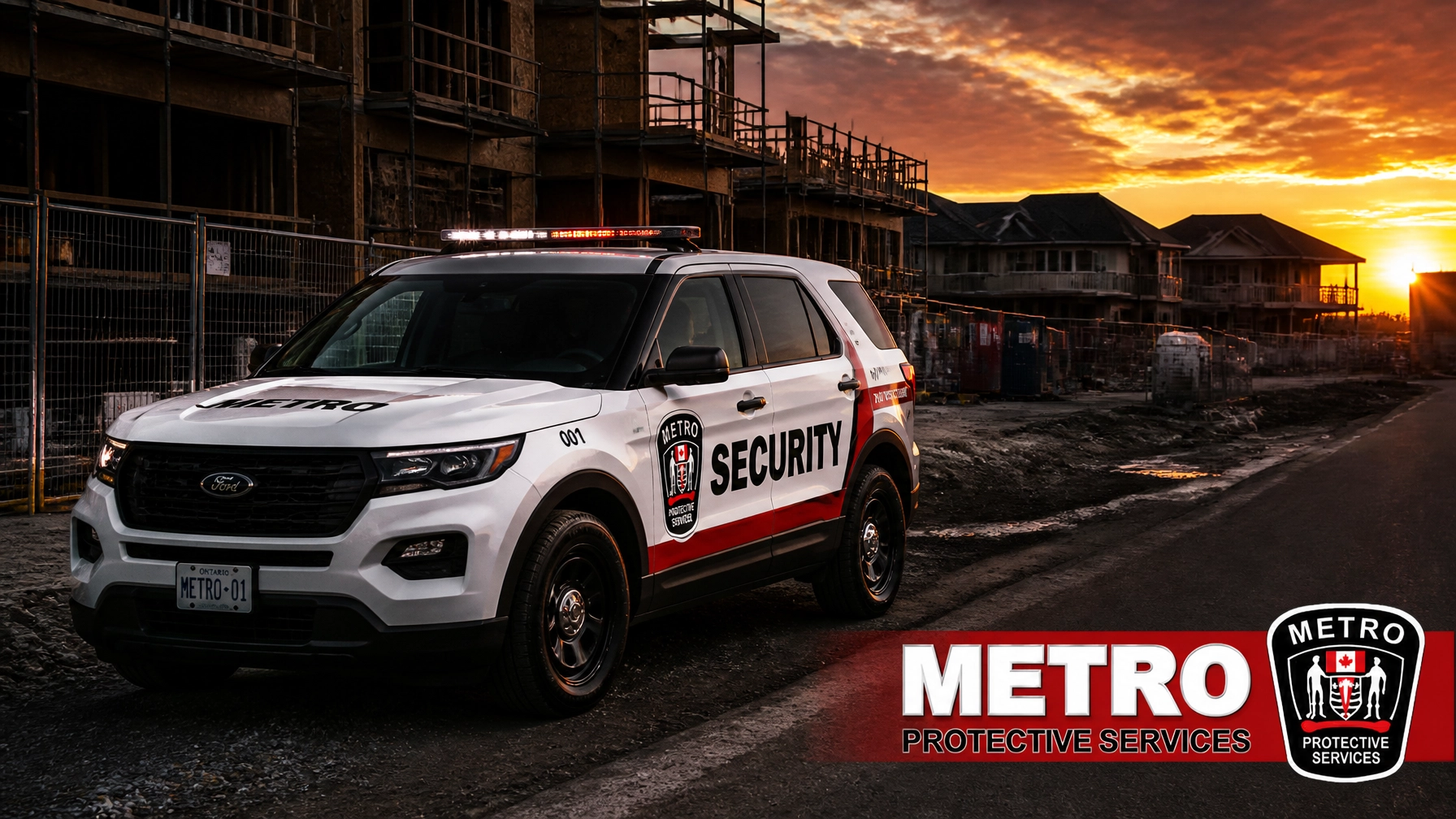
As daylight shortens across Toronto and the GTA, construction sites experience a distinct shift in their security profile. The working day may end while valuable tools, materials, equipment, and fuel remain on the property. Earlier sunsets create a longer period of darkness between crew departure and the start of overnight security coverage. Wet, cold conditions can also reduce visibility, discourage informal site activity, and make certain areas more difficult to inspect.
At the same time, many projects continue operating at a high pace before winter conditions arrive. Electrical materials, copper wire, fuel, tools, generators, lifts, and heavy equipment may be staged on-site while crews become smaller and weekend activity decreases. The result is a predictable exposure window: the period after the last trades leave, overnight hours, and extended gaps when a site is unoccupied.
For general contractors, developers, and property managers, effective construction site security services must account for these seasonal conditions. A locked gate is not enough. Protection should combine trained security personnel, controlled access, properly planned lighting, mobile patrols, dispatch coordination, and verifiable electronic reporting.

The late-season theft window: dusk, overnight hours, and weekends
Construction theft commonly occurs when a site is quiet and supervision is limited. In late fall, that quiet period can begin earlier in the evening. Contractors should pay particular attention to:
- The transition period after crews leave and before overnight patrols begin
- Weeknights when fewer subcontractors remain on the property
- Friday evening through early Monday morning
- Areas that become difficult to observe during rain, fog, or snow
- Temporary storage areas, open structures, and partially completed floors
- Locations that are poorly illuminated or hidden from neighbouring roads
The objective is not simply to have a guard present. It is to ensure that the entire site is inspected systematically, access points are controlled, and unusual activity is documented and escalated promptly.
A site security plan should also change as the project advances. Copper and electrical materials may become more exposed during rough-in. Tools and smaller equipment may be concentrated in trailers or storage containers. As exterior work progresses, heavy machinery, fuel tanks, generators, and lifts may remain outside for extended periods. Each phase creates different priorities for patrol routes and checkpoint placement.
Protecting copper, fuel, tools, and equipment
Late-season construction security should identify the assets most likely to be targeted and establish clear procedures for protecting them.
Copper wire and electrical materials
Copper wire, cable, and related electrical materials can be attractive targets because they are portable and have resale value. Reels, scrap containers, and partially installed materials should be kept in locked areas whenever practical. Deliveries should be scheduled as close as possible to installation, and supervisors should maintain a basic inventory of high-value materials.
Security personnel can include these areas in every scheduled inspection, recording the condition of storage locations and noting any damaged locks, cut fencing, disturbed materials, or unexplained movement.
Fuel and generators
Fuel theft can result in direct losses, equipment downtime, and project delays. Fuel tanks, generators, and vehicles should be parked in visible, well-lit locations with access limited to authorized personnel. Where appropriate, contractors should use locked fuel caps, secure storage, and documented fuel checks.
A patrol officer should record abnormal fuel levels, open compartments, missing caps, leaks, and evidence of tampering. These observations can be valuable when reviewing an incident with a contractor, insurer, or law enforcement agency.
Tools and portable equipment
Power tools, compressors, laser levels, generators, and smaller equipment can be removed quickly if they are left in unsecured vehicles or temporary structures. Contractors should use lockable tool storage, maintain serial-number records, and remove especially valuable equipment from the site when practical.
Security services can support these controls by verifying that trailers, sea containers, site offices, and equipment bays are secured at the end of the workday. The goal is to identify a problem before it becomes a substantial loss.
Site access control and perimeter protection
A construction site may have several vehicle entrances, pedestrian openings, temporary gates, and areas where fencing changes as work progresses. These conditions can make access control difficult, particularly after the regular crew has departed.
A practical late-season access plan should include:
- A defined primary entrance: Limit after-hours vehicle and pedestrian access to one controlled point whenever possible.
- Current authorization lists: Maintain names and contact details for approved contractors, supervisors, delivery personnel, and emergency contacts.
- Gate and lock inspections: Check for damaged hinges, cut locks, forced entry, and gaps beneath or beside temporary fencing.
- Code and key management: Remove access privileges when subcontractors complete their work and change codes when required.
- Visitor and delivery documentation: Record unexpected arrivals, abandoned vehicles, and requests for access that cannot be verified.
- Clear signage: Identify the property as private, controlled, and monitored without creating confusion about emergency access.
Security personnel should not assume that every person found on-site is involved in criminal activity. Trespass, unauthorized access, or temporary encampment concerns should be handled professionally and according to site procedures. Where a person appears vulnerable or requires assistance, guards should use de-escalation, notify dispatch, and contact emergency or community resources when appropriate. A clear response protocol protects both the individual and the property.
This approach is particularly important for projects located near shelters, treatment facilities, transit corridors, or other areas with higher pedestrian activity. Security planning should be factual, non-discriminatory, and focused on behaviour, access authorization, safety, and property risk.
Lighting and mobile patrol coverage
Perimeter lighting should support both deterrence and safe observation. Construction managers should review whether lighting reaches:
- Main and secondary gates
- Material staging zones
- Fuel and generator areas
- Tool trailers and storage containers
- Site offices and parking areas
- Blind corners created by hoarding, scaffolding, or equipment
- Building entrances and ground-level openings
Motion-activated lighting can be useful in selected areas, while consistent lighting may be more appropriate for primary entrances and frequently used routes. Fixtures should be maintained for wet and cold conditions, and temporary power arrangements should be checked regularly.
A stationary guard can provide an important visible presence, but large sites may also require mobile patrol services Toronto contractors can schedule at specific intervals. Mobile units can inspect remote sections of the property, verify perimeter conditions, respond to alarms, and provide an unpredictable patrol pattern that makes unauthorized activity more difficult.

Sky-Guard Monitoring System: seasonal checkpoints and verified reporting
Late-season conditions make accountability especially important. Metro Protective Services uses the Sky-Guard Monitoring System to support GPS check-ins, electronic patrol verification, and daily reporting.
For a construction project, seasonal checkpoints can be configured around the areas most exposed during the fall build period. These may include:
- Main and secondary gates
- Copper and electrical material storage
- Fuel tanks and generators
- Equipment and vehicle staging
- Site offices and trailers
- Building entrances and perimeter corners
- Areas affected by changing construction phases
When guards complete a checkpoint, Sky-Guard records the location and time of the check-in. If a checkpoint is missed or a scheduled patrol is not completed as expected, the information can be reviewed by the 24/7 dispatch centre for follow-up.

Daily electronic reports can document patrol activity, access issues, lighting concerns, damaged fencing, weather-related hazards, suspicious activity, and incidents requiring escalation. This gives project managers a clearer record than handwritten logs alone.
Incident documentation, insurance, and liability protection
A professional security program should produce useful records before, during, and after an incident. Reports should identify the date, time, location, people involved, observations made, actions taken, notifications completed, and follow-up requirements. Photographs, GPS-verified patrol activity, and time-stamped electronic notes may also assist with internal investigations and insurance documentation.
Contractors and property managers should confirm security requirements with their insurer and broker. Coverage conditions may address fencing, lighting, alarm systems, patrol frequency, equipment storage, or reporting procedures. Security records do not replace insurance obligations, but they can help demonstrate that reasonable controls were implemented and that reported events were managed according to an established process.
Metro Protective Services provides coordinated security guard services Toronto construction clients can use to support these requirements. Our guards, mobile patrol teams, supervisors, and dispatch centre work together to maintain a documented response structure.
Why GTA construction clients choose Metro Protective Services
Metro Protective Services has served Toronto and the GTA since 2000. Our approach combines professional security guards with 24/7 dispatch centre coordination, mobile patrol, loss prevention expertise, and electronic reporting.
Services can be adapted to the project’s stage and risk profile, including:
- Overnight construction site guarding
- Scheduled and unscheduled mobile patrols
- Gatehouse and access control services
- Perimeter, equipment, and material inspections
- Alarm response and lock/unlock assistance
- Fuel, copper, tools, and equipment protection
- GPS-verified checkpoints through Sky-Guard
- Daily electronic reports for management review
As projects approach occupancy, security requirements may change. A development may transition from construction guarding to residential concierge and lobby security, commercial front-desk protection, or ongoing property patrols. Planning this transition early helps maintain continuity as workers, residents, tenants, and visitors begin using the property.
Prepare your construction site before the next dark weekend
Earlier sunsets, wet weather, reduced crews, and extended weekend gaps create a different security environment for GTA job sites. Contractors should review lighting, storage, access control, patrol routes, reporting procedures, and insurance documentation before the site reaches its busiest late-season phase.
Need Help? Chat with us to discuss a seasonal construction security plan.
Submit a request for a quote to learn how Metro Protective Services can help protect your project, equipment, materials, and documentation throughout Toronto and the GTA.
Recent Posts
- Static Guards Vs. Mobile Patrol: Which Is Better for Your GTA Business?
- The Ultimate Guide to Security Guard Services Toronto
- Real-Time GPS Reporting: Why It Matters for Security Guard Services in Toronto

