

-
info@Metroprotective.ca
Send Email
-
Toronto – Hamilton – London – Windsor
Metro Protective Services
Tel: 416-240-0911
Confidentiality Guaranteed
Tel: 416-240-0911
Confidentiality Guaranteed
29
Aug
Aug
Tactical Security Services for High-Risk GTA Properties: Rapid Response, Damage Prevention and Vacant Building Protection
Breadcrumb: Home > Blog > Tactical Security Services Series > High-Risk GTA Property Protection
Published: August 28, 2026
Category: Tactical Security Services, Property Protection, Mobile Patrol
Series: Tactical Security Services : End-of-Month Edition
High-risk properties require more than a routine security presence. Construction sites, vacant buildings, industrial facilities, distressed commercial properties, and residential buildings with recurring after-hours incidents require a coordinated plan that addresses prevention, detection, response, documentation, and recovery.
For property managers and business owners across Toronto and the GTA, the objective is not simply to place a guard at an entrance. Effective protection requires trained personnel, clear procedures, reliable communication, mobile patrol coordination, and timely information for management.
Metro Protective Services has provided professional protection throughout Toronto and the GTA since 2000. Our approach combines trained security personnel with a 24/7 dispatch centre, mobile supervision, GPS-verified check-ins, and detailed electronic reporting. This structure helps clients respond to incidents lawfully and proportionately while reducing the likelihood of theft, vandalism, unauthorized access, and preventable property damage.
Why High-Risk Properties Require a Specialized Plan
Risk is influenced by a property’s location, design, operating hours, occupancy, surrounding activity, asset value, and incident history. A site located near a homeless shelter, drug rehabilitation facility, or supervised consumption or injection site should not be assessed solely on proximity. Security planning must be based on observable conditions, documented incidents, access vulnerabilities, lighting, visibility, emergency access, and the needs of the people who use or occupy the property.
This distinction matters. A professional security plan protects the property without unfairly treating vulnerable community members as threats. Guards must focus on behaviour and specific security concerns, not assumptions about a person’s housing status, health, or background.
A high-risk property assessment should identify:
- Points where unauthorized individuals can enter or remain unseen.
- Areas vulnerable to copper, equipment, fuel, or material theft.
- Doors, windows, fencing, gates, and lighting requiring attention.
- Patterns of trespassing, loitering, vandalism, or property damage.
- Emergency access routes and procedures for contacting police, fire, or medical services.
- The appropriate balance between static coverage, mobile patrols, concierge support, and remote coordination.
Rapid Response Begins with Dispatch Coordination
Rapid response is most effective when the provider has a clear operating structure before an incident occurs. At Metro Protective Services, our 24/7 dispatch centre coordinates guards, mobile patrol units, supervisors, client contacts, and emergency communications across the GTA.
When a concern is reported, dispatch personnel can help determine:
- The nature and urgency of the incident.
- Whether life safety or medical assistance is involved.
- Which mobile unit or supervisor is best positioned to attend.
- Whether the on-site guard requires support.
- Which client representatives or emergency services should be notified.
- What information must be documented for follow-up.
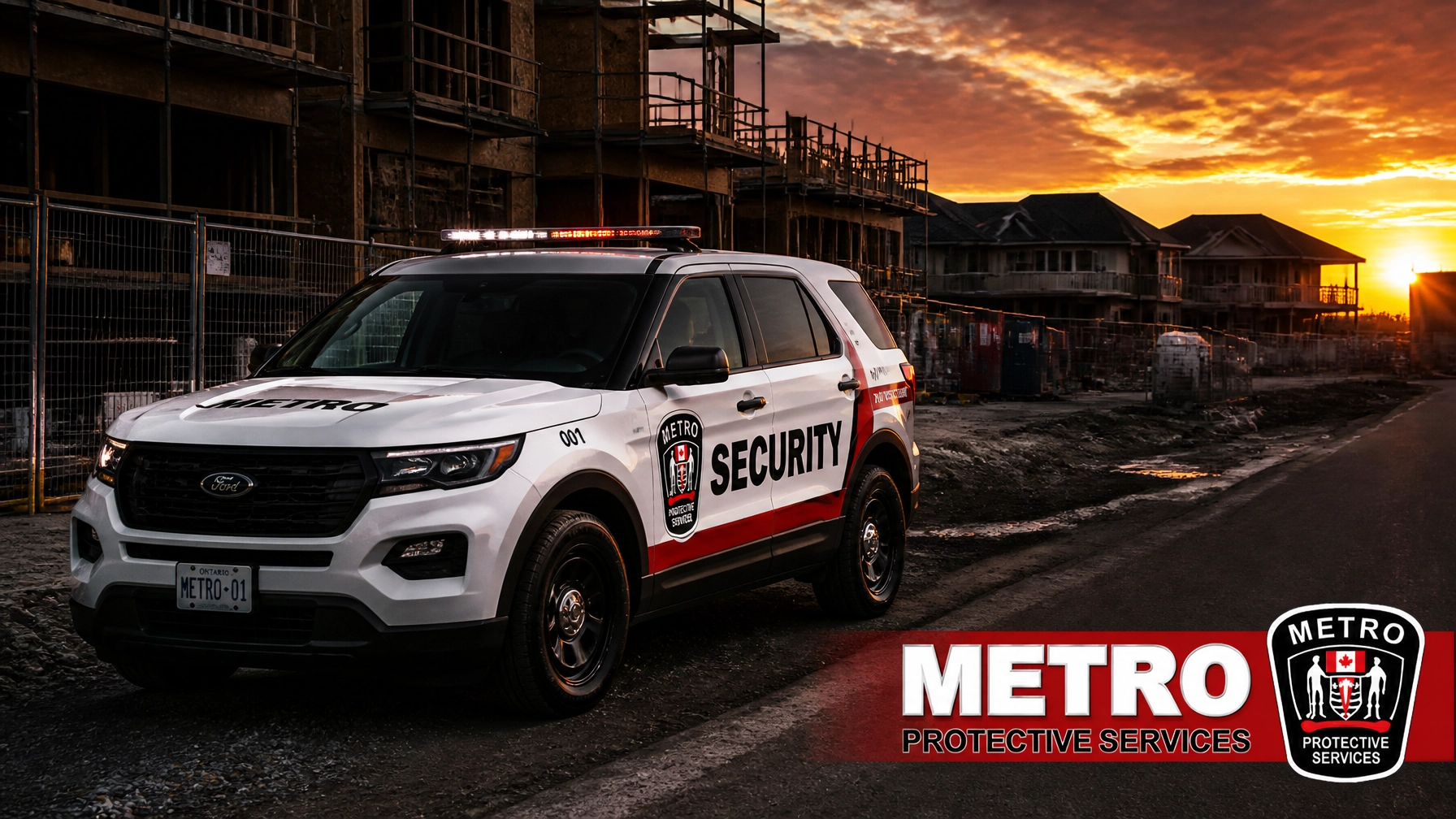
A marked Metro patrol vehicle provides a visible deterrent while allowing mobile personnel to attend properties that may not require a full-time static post. Patrols can include scheduled and randomized site visits, alarm response, lock and unlock assistance, perimeter inspections, key management, and checks of vulnerable areas.

The goal is not to encourage unnecessary confrontation. A rapid response should stabilize the situation, protect people, preserve evidence, and support the appropriate emergency or law-enforcement response. Security guards are not police officers. Their actions must remain within their authority, training, site instructions, and applicable law.
Preventing Damage Before It Becomes a Major Loss
Property damage often begins with a relatively small weakness: an unsecured door, poor lighting, a damaged fence, an exposed utility area, or an opening that has not been inspected since the previous shift. Regular observation and prompt reporting can help property managers address these conditions before they become significant losses.
Tactical security services for damage prevention may include:
- Exterior perimeter inspections.
- Door, gate, and window checks.
- Monitoring of loading bays, parking areas, and service corridors.
- Identification of graffiti, broken fixtures, water leaks, fire hazards, and trip hazards.
- Observation of construction materials, tools, fuel, and heavy equipment.
- Verification that restricted areas remain secured.
- Documentation of damage with timestamps and photographs.
- Immediate escalation of urgent hazards to management or emergency services.
At construction and industrial sites, protection must account for changing conditions. Fencing may be moved, materials may be relocated, and access points may change as work progresses. Security instructions should therefore be reviewed with site managers and updated when the physical environment changes.
Metro’s construction site security services are designed around these practical concerns, including access control, patrols, activity monitoring, and protection of equipment and materials.
Vacant Building Protection Requires Consistency
Vacant buildings are especially vulnerable because they may have limited natural surveillance and delayed detection of problems. Trespassing, squatting, theft, vandalism, illegal dumping, fire hazards, and water damage can continue for hours before an owner or property manager becomes aware of the issue.
An effective vacant-building program should establish a documented inspection routine.
Vacant Building Security Procedure
-
Complete a baseline inspection.
Record the condition of doors, windows, fencing, lighting, mechanical rooms, roof access, stairwells, and utility areas. -
Secure all authorized access points.
Confirm that locks, barriers, gates, and boarding are functional. Maintain an accurate key and access list. -
Set patrol frequency according to risk.
Use scheduled inspections where consistency is required and randomized visits where predictability could increase vulnerability. -
Inspect both the perimeter and interior.
Where authorized and safe, check for forced entry, damage, unauthorized occupancy, hazards, and signs of tampering. -
Escalate urgent conditions immediately.
Fire, flooding, structural concerns, exposed electrical equipment, active break-ins, or medical emergencies require prompt communication through dispatch and the appropriate emergency channel. -
Submit a complete electronic report.
Document the time, location, observations, actions taken, photographs where appropriate, and any required follow-up. -
Review recurring findings.
Repeated damage or access attempts may require improved lighting, repairs, fencing, boarding, camera coverage, additional patrols, or temporary static security.
GPS check-ins help verify that assigned patrols reached designated locations. Electronic reporting gives property managers a clearer record of inspections and incidents than informal or incomplete handwritten notes. Metro provides daily electronic reports so clients can review services delivered and identify trends requiring attention.
Why Specialized Training Matters in High-Risk Environments
A high-risk site may involve conflicting demands. A guard may need to protect a property, assist a resident or worker, manage an agitated individual, preserve a potential crime scene, and communicate with emergency services within the same shift.
Specialized training helps personnel respond consistently. Important areas include:
- Threat awareness and situational assessment.
- Verbal de-escalation and conflict management.
- Emergency communication and dispatch procedures.
- First aid and life-safety priorities.
- Observation, note-taking, and electronic reporting.
- Access control and trespass procedures.
- Crime-scene preservation.
- Fire, flood, utility, and environmental hazard recognition.
- Appropriate use-of-force principles, where applicable.
- Cultural awareness, professionalism, and respectful public interaction.
De-escalation should be the preferred approach whenever circumstances permit. Guards should maintain a safe distance, use calm and clear language, avoid provocative conduct, provide reasonable directions, and request assistance when the situation exceeds their authority or resources.
A lawful response is also a proportionate response. Security personnel should not use more force than necessary and should not pursue actions better handled by police, fire services, paramedics, building management, or specialized contractors. Clear post orders and regular communication with supervisors are essential.
Coordinating Residential and Condo Protection
High-risk conditions can also affect apartment and condominium properties. Residential managers may need additional protection for underground parking, loading areas, mechanical rooms, vacant suites, entrances, and shared amenities.
A professional concierge or lobby security team can support:
- Controlled entry for residents, guests, and contractors.
- Visitor and delivery procedures.
- Monitoring of lobby and parking activity.
- Incident escalation through dispatch.
- Assistance during building emergencies.
- Communication with residents in a calm and professional manner.
- Daily reporting for property management and condominium boards.
Metro’s concierge services support condominiums, apartment buildings, and hotels with a service-oriented presence that complements property operations. In higher-risk settings, concierge coverage can be combined with mobile patrols and supervisor visits.
Property Manager’s High-Risk Security Checklist
Before launching or reviewing a security program, confirm that your provider can answer the following questions:
- Is there a 24/7 dispatch centre available for urgent coordination?
- How are mobile patrols assigned and supervised?
- Are guard and patrol arrivals verified through GPS check-ins?
- Are electronic reports delivered promptly to management?
- Are patrol routes and inspection points documented?
- Are guards trained in de-escalation and emergency response?
- Are procedures written for vacant-building access and suspected trespassing?
- Does the plan identify when police, fire, or medical services must be contacted?
- Are reports detailed enough to support maintenance, insurance, and incident reviews?
- Can coverage be adjusted when property conditions or risk levels change?
Organizations comparing security guard services toronto providers should evaluate the complete operating model rather than comparing hourly rates alone. Businesses researching private security toronto options should also ask how the provider manages supervision, communication, documentation, and accountability after deployment.
A Coordinated Security Partner for the GTA
High-risk properties require preparation, not improvised reactions. The most effective programs combine visible deterrence, trained personnel, mobile patrol coordination, responsive dispatch, respectful communication, and accurate reporting.
Metro Protective Services has served Toronto and the GTA for more than 20 years. Our security services can be tailored for construction sites, industrial and logistics facilities, retail properties, residential buildings, vacant structures, and commercial locations.
Need Help? Chat with us.
Submit a request for a quote and speak with Metro Protective Services about a site assessment, patrol schedule, vacant-building program, or integrated high-risk property plan.
Tags
tactical security services · security guard services toronto · private security toronto · rapid response security · vacant building protection · property damage prevention · mobile patrol GTA · construction site security · condo security · electronic security reporting
Recent Posts
- Mobile Patrol: The Cost-Effective Security Solution for Toronto Businesses : May 16, 2026
- 7 Mistakes You’re Making with Construction Site Security and How to Fix Them : May 6, 2026
- The Condo Board’s Guide to Hiring a Professional Concierge Team in Toronto : May 9, 2026
- Securing the Scene: A Guard’s Protocol for Discovering a Crime Scene : May 11, 2026
Metro Protective Services : Professional security protection for Toronto and the GTA since 2000.


De-Escalation and Customer Service: The Human Standard for Professional Mall Security – Metro Protective Services
29 Aug, 2026[…] Tactical Security Services for High-Risk GTA Properties […]