

-
info@Metroprotective.ca
Send Email
-
Toronto – Hamilton – London – Windsor
Metro Protective Services
Tel: 416-240-0911
Confidentiality Guaranteed
Tel: 416-240-0911
Confidentiality Guaranteed
20
Oct
Oct
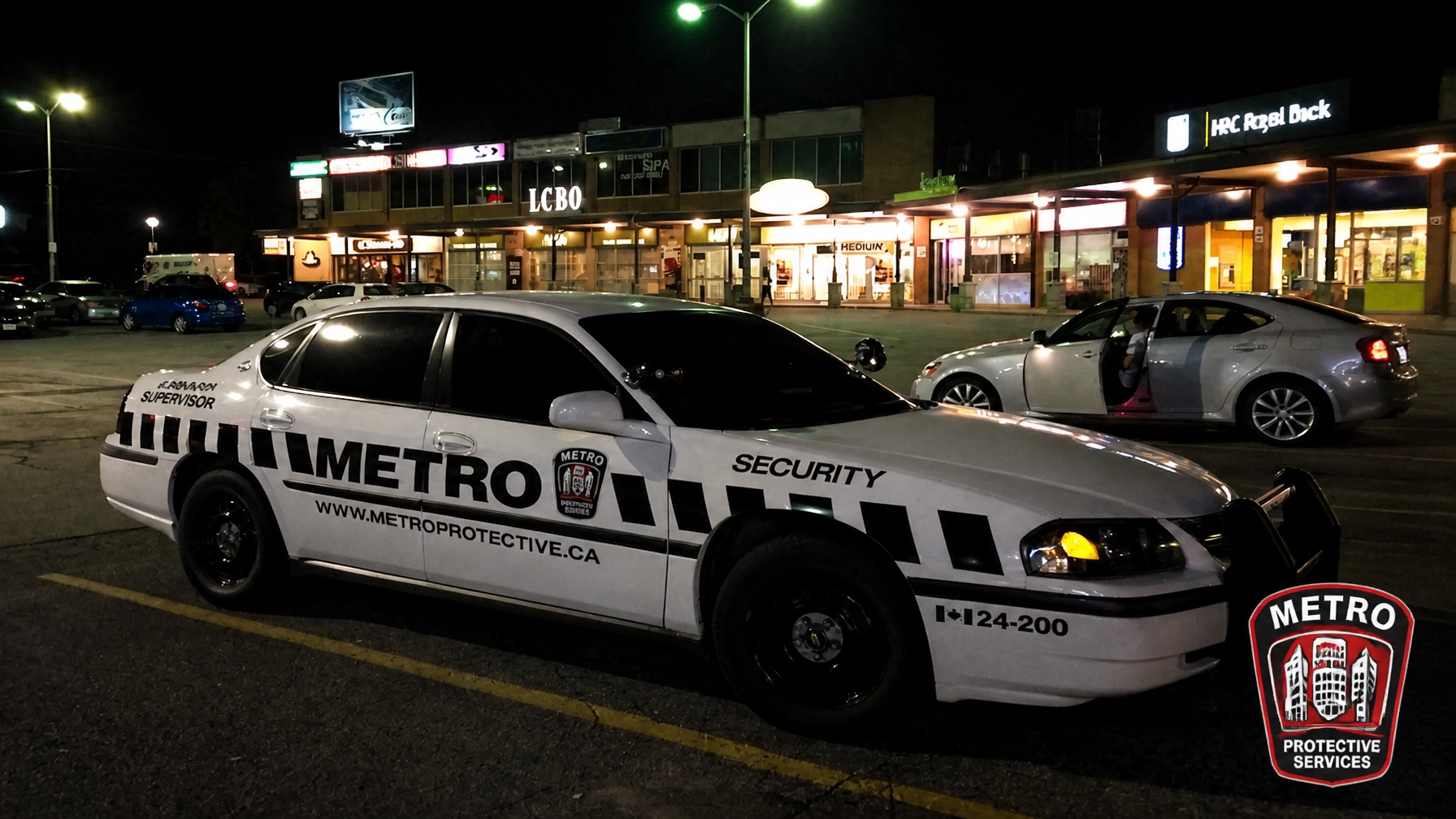
Comprehensive Security Guard and Property Protection Services in Toronto and the GTA: Mobile Patrol and Parking Enforcement That Get GTA Parking Lots Ready for Winter Before the First Snowfall
Breadcrumb: Home › Blog › Mobile Patrol and Parking Enforcement
Date: Friday, October 16, 2026
Series: Comprehensive Security Guard and Property Protection Services in Toronto and the GTA, Entry 18
Category: Mobile Patrol | Parking Enforcement | Residential Security | Winter Property Preparation
The first snowfall can turn a routine parking issue into an access and safety problem. A vehicle left across a fire route may obstruct emergency response. Cars parked in plow paths can delay snow clearing, while longer nights and reduced visibility make poorly lit lots and underground garages harder to monitor.
For property managers, condo boards and commercial owners, winter preparation should begin before the forecast turns urgent. A planned program of mobile patrol services in Toronto and parking enforcement can help identify concerns early, document activity and support a coordinated response.

Why the first snowfall changes parking enforcement overnight
Cold weather changes parking patterns. Overnight guests may use fire routes, accessible spaces or areas needed for snow storage. Residents and visitors may park longer than expected during storms, and vehicles left in a plow route can prevent crews from clearing the area effectively. In an underground garage, snow and slush brought in by vehicles can also affect visibility and the condition of driving and walking surfaces.
Toronto’s 2025 parking data show how often parking restrictions are breached across the city: it issued 2,052,180 parking penalty notices, including 30,851 for parking within three metres of a fire hydrant and 15,315 for blocking a fire route. These are citywide figures, not a forecast for any individual property, but they underscore why hydrant access and fire routes merit specific attention in a winter-readiness plan. See the City’s 2025 parking penalty statistics.
Snow-route restrictions matter as well. During a snow event, parking on designated routes is prohibited so crews can work; the City’s February 2025 snow-clearing notice stated that vehicles could be towed at the owner’s expense and fined up to $200. Rules and penalty amounts may change, so property teams and drivers should check current City notices for each event.
Private-property enforcement is a separate matter. Security personnel can help monitor parking under the property’s approved procedures and report or escalate violations. City tickets and public-road enforcement remain the responsibility of authorized municipal officials.
What Metro patrols look for before winter
A pre-season parking audit gives property teams a chance to identify operational issues before snowfall makes them harder to see or correct. Metro patrol instructions can include checks of:
- Fire routes and hydrants: Confirm that marked routes and required hydrant clearances are unobstructed.
- Accessible parking: Note unauthorized use and keep designated spaces and access aisles available.
- Plow and snow-storage paths: Identify parked vehicles or other obstructions that may interfere with clearing plans.
- Abandoned or unauthorized vehicles: Record vehicles that appear to be stored, left in restricted areas or inconsistent with site parking procedures.
- Lighting and sightlines: Check for dark areas, failed fixtures, blocked views, damaged mirrors or other visibility concerns.
- Garage access points: Observe doors, gates and pedestrian entrances for damage, unusual activity or signs that access controls are not working as intended.
Findings should be shared with the property manager or designated contact for follow-up. Patrol officers can report a failed light or blocked access point; building staff or contractors are responsible for repairs and maintenance.
For residential properties, parking oversight works best as part of the wider security plan. A professional concierge or lobby team can reinforce visitor procedures, direct parking questions to the right contact and notify management when recurring issues affect residents. Metro provides concierge services for residential and condo properties, which can complement parking patrols without replacing property-specific access and emergency procedures.
Residential garages and vehicle theft: use layered deterrence
A garage can feel secure because it is indoors, but it still needs attention to lighting, access control and patrol coverage. As nights grow longer, a dark corner or a door that does not close reliably may provide an opportunity for vehicle theft or vandalism.
NOW Toronto reported that Toronto auto thefts were up 8.8% so far in 2026, following a substantial decline in 2025. The article also notes that high-density residential properties, including condos and apartments, remain among the environments of concern. This year-to-date figure is not an annual total; property teams can review the reporting at NOW Toronto.
Mobile patrols add a visible, variable presence, but they are one layer, not a substitute for functioning garage doors, access controls, adequate lighting, cameras where installed, or residents following vehicle-security practices. Patrols can check common routes, look for signs of tampering, observe access points and promptly escalate concerns.
Where a residential property is near a shelter, rehabilitation facility or supervised consumption site, planning should focus on verified site conditions and specific incidents, not assumptions about people based on where they receive services. Property teams can set clear patrol instructions, use respectful communication and de-escalation practices, and coordinate concierge, management and emergency-response procedures as appropriate.

Documented enforcement helps property boards follow up
Effective parking enforcement depends on clear, consistently applied procedures. Before winter, property managers should confirm which areas are restricted, how warnings are handled, who can authorize towing, what documentation is required and how residents or visitors can raise a concern. Rules should align with property agreements, posted signage and applicable law.
Depending on the site’s approved policy, patrol staff can document an observed violation, provide a warning where authorized, notify management and coordinate with an approved towing provider when the required conditions are met. Documentation may include the time and location, the type of obstruction, a factual description and photographs where permitted by site policy. For immediate threats or emergencies, the established escalation plan should guide next steps.
A consistent record can help boards and managers identify repeat problems, demonstrate what was observed and track whether corrective action was taken. It does not guarantee a particular legal outcome or remove the property’s responsibilities, but it can give decision-makers a clearer operational record.
Metro’s Sky-Guard Monitoring System supports GPS check-ins during patrols, while daily electronic reports record patrol activity and reported observations. GPS and time-stamped records give clients visibility into rounds and exceptions; they are useful accountability tools, not a replacement for reviewing incidents and following up on maintenance needs.
Choose coverage that fits the property and its schedule
Some sites benefit from scheduled patrols at predictable operational points, such as after building quiet hours or before plowing begins. Others may need variable-time mobile checks, particularly overnight, when parking patterns and access activity can change. A coverage plan can combine both approaches and increase attention during forecast snow events or other higher-demand periods.
The right arrangement depends on the property’s layout, parking rules, history of incidents, access systems and snow-clearing plan. A condo garage, an open commercial lot and a mixed-use property have different risks and staffing needs. Metro Protective Services has served Toronto and the GTA since 2000 and provides a 24/7 dispatch centre to coordinate patrols and escalate reported issues. Explore our mobile patrol and parking enforcement services or review our broader security services.
A useful pre-snowfall review brings property management, parking operations, snow contractors and security together. Confirm the areas that must stay clear, who receives urgent calls and how patrol findings will be shared. That preparation can help reduce confusion when the first storm arrives.
Recent Posts
- Retail Loss Prevention That Prepares GTA Stores for the Holiday Shopping Rush
- Construction Site Security Services for GTA Job Sites as Winter Approaches
Need help preparing your property?
Metro Protective Services provides mobile patrol, parking enforcement, residential concierge and security guard services across Toronto and the GTA. Need help getting your property winter-ready? Chat with us or submit a quote request now.
Comments: Have a winter parking or patrol-planning question? Leave a comment or contact our team. We will be pleased to help you identify practical next steps.
Tags: Mobile Patrol Services Toronto, Parking Enforcement, Security Guard Services Toronto, Winter Property Preparation, Residential Security Toronto, Property Protection

