

-
info@Metroprotective.ca
Send Email
-
Toronto – Hamilton – London – Windsor
Metro Protective Services
Tel: 416-240-0911
Confidentiality Guaranteed
Tel: 416-240-0911
Confidentiality Guaranteed
31
Oct
Oct
Comprehensive Security Guard and Property Protection Services in Toronto and the GTA: Concierge Security Services That Keep Toronto Lobbies Safe on Halloween Night
Toronto and the GTA | October 31, 2026 | Series Entry 29 | Condo & Residential Security
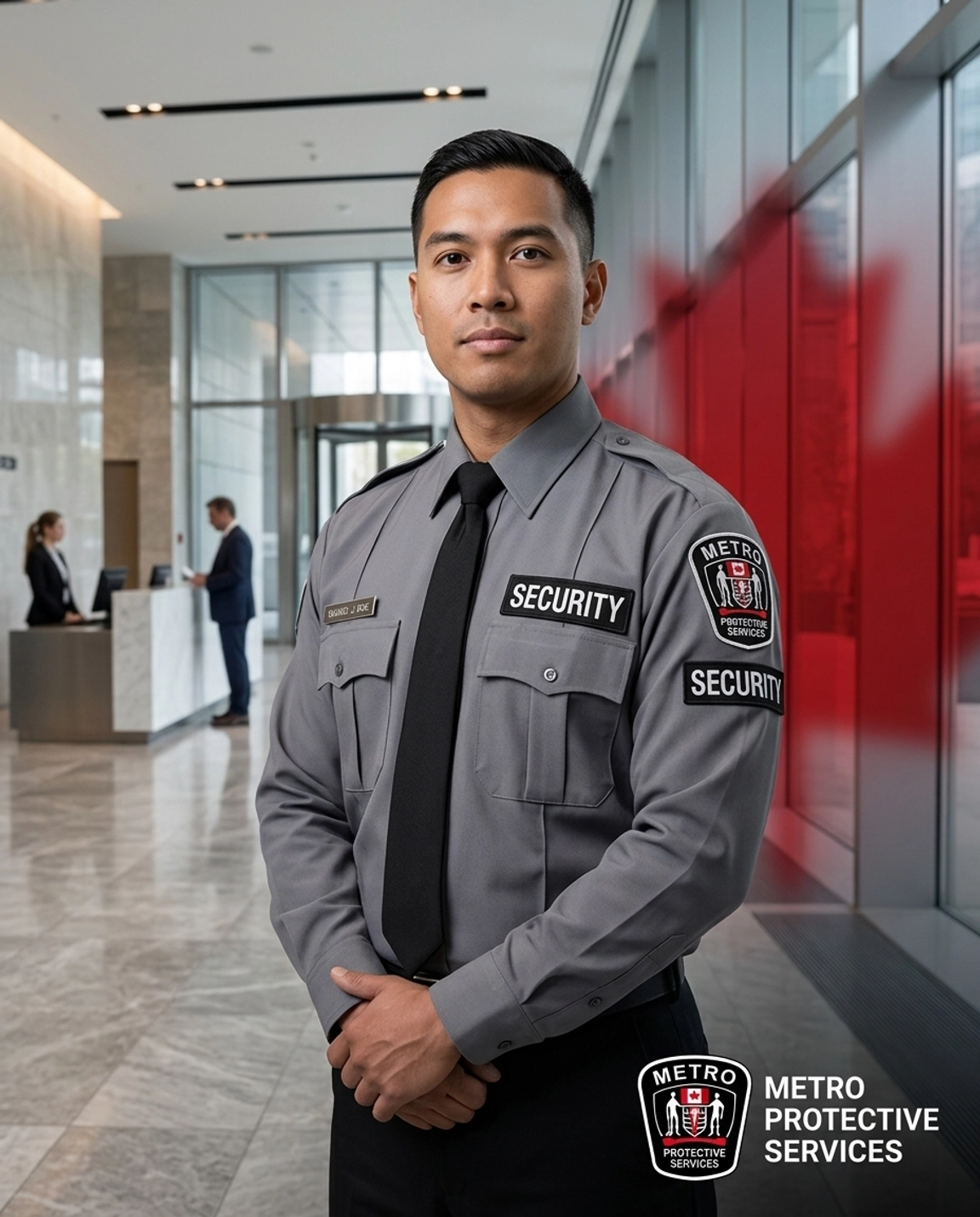
Halloween night changes the rhythm of a Toronto lobby: trick-or-treaters pass through ground-floor spaces, costumed guests arrive for parties, amenity rooms fill, and residents return late. Boards and managers evaluating Security Guard Services Toronto, Construction Site Security Services, Mobile Patrol Services Toronto, Concierge Security Services, or Residential Security Toronto can plan for the evening in the same way: with pre-authorization, verification, and a calm front-desk process. Serving Toronto and the GTA since 2000, Metro Protective Services provides a 24/7 dispatch centre and the Sky-Guard Monitoring System, which supports GPS check-ins, real-time monitoring, and daily electronic reports. This article focuses on front-desk and lobby operations on Halloween night.
Why Halloween Night Changes the Lobby Rhythm: Concierge Security Services on October 31
On October 31, a lobby may see a steady stream of costumed visitors with no appointment, amenity rooms booked for parties, and residents hosting guests who are unfamiliar to the desk. Couriers and contractors may complete visits earlier than usual, while ground-floor doors open more often as groups come and go. Later in the evening, residents may return after parties or neighbourhood events.
None of these changes is a problem by itself. The operational risk is an improvised desk process on one of the busiest social nights of the fall. If staff have to decide what to do each time an unfamiliar visitor arrives, verification can become inconsistent and residents may receive different answers. A concierge desk that follows a routine process can accommodate the evening’s changing traffic while keeping access decisions tied to the building’s procedures.
Guest Lists, Pre-Authorization, and Verification at the Door: Security Guard Services Toronto on a High-Traffic Night
For amenity bookings and resident-hosted parties, collect guest names in advance and provide the list to the desk before the evening begins. A pre-authorized list gives staff a clear reference point instead of requiring them to judge a visitor by a costume, appearance, or group size. Confirm what the desk should do when a name is missing, a host cannot be reached, or a guest arrives outside the expected time.
At the door, greet visitors early and verify their host and authorization politely, including when they are in costume. Where the building’s agreed procedure calls for identification, explain the step consistently and discreetly. Record guest entries with the time, unit, and host, and follow the same exception process when information cannot be confirmed. A clear, controlled entry point also lets staff engage visitors before they reach another door, rather than making tailgating a confrontation after the fact.
Post amenity-room rules, guest limits, and quiet hours where bookers can see them. Confirm who is responsible for closing the room and what checks are expected at the end of a booking. That makes close-out a routine record of the room’s condition and any outstanding issue, rather than an argument at the desk. With a trained guard at the front desk, courtesy and verification can happen at the same time. Learn more about Security Guard Services Toronto.
What Ontario Law Says About Visitors, Notices, and Halloween Night
Ontario’s Trespass to Property Act defines an “occupier” to include a person in physical possession of premises, or a person responsible for and in control of the premises, activities there, or people allowed to enter. Section 2(1) makes it an offence to enter when entry is prohibited without the occupier’s express permission, or to refuse to leave immediately after being directed to do so by the occupier or someone the occupier has authorized. On conviction, the maximum fine is $10,000.
Notice under section 5(1) may be given orally, in writing, by posted signs, or through the Act’s colour-marking system. Section 3(2) presumes that access to a building’s door by a means apparently provided for access is not prohibited when used for lawful purposes. That provision should be read in context: it does not grant permission to enter a condominium’s private areas or override the building’s applicable access rules.
Section 9(1) sets out an arrest-without-warrant framework for a police officer, an occupier, or a person authorized by the occupier who has reasonable and probable grounds to believe someone is on the premises contrary to section 2. Under section 9(2), a non-police person who makes such an arrest must promptly call a police officer and deliver the person into that officer’s custody. This is not an ordinary visitor-verification step. A concierge or guard acts as a person authorized by the occupier only within the property manager’s written site instructions, and the building’s own procedures govern.
Under section 35 of Ontario’s Private Security and Investigative Services Act, 2005, a person acting as a security guard must carry their licence, identify themselves as a security guard on request, and produce their licence on request. Ontario Regulation 363/07, the Code of Conduct, requires licensees to act honestly and with integrity, comply with laws, treat all persons equally, avoid unnecessary force, keep work-related information confidential, and co-operate with police where required by law. On Halloween, these duties support applying the same courteous, consistent process to visitors in costume as to anyone else.
This article provides general information, not legal advice. Property managers should confirm their own obligations and written instructions.

After the Last Guest Leaves: Mobile Patrol Services Toronto and the Overnight Reset
When the final guests leave, the site’s normal overnight routine can resume. Staff can inspect and reset amenity rooms, noting their condition and any issues requiring follow-up. Party-end noise concerns or parking complaints can be recorded as they occur, while garage and perimeter checks return to the agreed route. GPS-verified check-ins through the Sky-Guard Monitoring System can feed into the daily electronic report, giving the property a time-stamped account of the assigned checks.
As community context, the Canada Safety Council’s “See and Be Seen” guidance advises pedestrians to wear bright or retro-reflective clothing so drivers can see them in fall dusk and darkness, and advises drivers to keep an extra lookout for children as it gets dark. Property managers can share a visibility reminder with residents before Halloween evening.
A mobile patrol route can include a building’s lobby, amenity floors, and garage on the same night. Exceptions can be escalated through Metro’s 24/7 dispatch centre under the agreed site instructions. Find out more about mobile patrol services Toronto.

One Standard Across the Property: Residential Security Toronto, Construction Site Security Services, and Halloween Night Everywhere Else
The same pre-authorization and verification habit transfers across property types. A Residential Security Toronto desk can greet costumed visitors using the same clear process it uses for couriers, supported by concierge security services. At a vacant site, Construction Site Security Services can support controlled gate access and posted notice. Retail and plaza managers also face changing evening traffic and can set clear visitor procedures.
A Halloween Night Checklist for Condo Boards and Property Managers
- Collect guest lists for every amenity booking and share them with the desk before the evening.
- Brief the concierge on costume-season identification: verify everyone politely, and refer exceptions to the supervisor.
- Keep one controlled lobby entry and greet visitors before they reach the second door.
- Post amenity-room rules, quiet hours, and guest limits where bookers can see them.
- Log every guest entry with time, unit, and host, and record every exception the same way.
- Schedule amenity-room and garage close-out checks, and record their condition.
- Share the Canada Safety Council visibility reminder with residents before dusk on October 31.
- File the daily electronic report the same night so the Halloween record is complete while details are fresh.
Need Help? Chat with Us
Condo boards, property managers, and business owners across Toronto and the GTA are welcome to request a quote or property walkthrough. We can discuss Halloween coverage, front-desk procedures, and daily reporting based on your site’s needs. Chat with us on WhatsApp, or visit our careers page if you are interested in joining Metro.
Recent Posts
- Retail Loss Prevention That Starts at the Loading Dock as Holiday Freight Peaks
- Concierge Security Services That Make the Toronto Front Desk a Defensible Record
- Mobile Patrol Services Toronto Portfolios Can Span Several Addresses at Once
Tags: Concierge Security Services, Security Guard Services Toronto, Mobile Patrol Services Toronto, Residential Security Toronto, Construction Site Security Services, Halloween Lobby Security, Guest Pre-Authorization, Sky-Guard Monitoring System, Electronic Reporting, GTA Condo Security

