

-
info@Metroprotective.ca
Send Email
-
Toronto – Hamilton – London – Windsor
Metro Protective Services
Tel: 416-240-0911
Confidentiality Guaranteed
Tel: 416-240-0911
Confidentiality Guaranteed
09
Oct
Oct
Comprehensive Security Guard and Property Protection Services in Toronto and the GTA: Mobile Patrol and Parking Enforcement That Protect GTA Properties Into the Thanksgiving Long Weekend
Breadcrumb: Home > Blog > Mobile Patrol and Parking Enforcement
Published: October 8, 2026
Category: Mobile Patrol, Parking Enforcement, Property Protection
Service area: Toronto and the Greater Toronto Area
As Toronto and the GTA move deeper into autumn, property managers, business owners, condo boards, and residents face a predictable change in security conditions. Daylight hours become shorter, exterior areas become difficult to observe earlier in the evening, and wet leaves can create hazards around entrances, parking areas, walkways, ramps, and construction sites.
The Thanksgiving long weekend adds another operational consideration. On Thanksgiving Monday, October 12, 2026, many offices, financial institutions, industrial facilities, and construction sites will operate with reduced staffing or remain closed. Commercial plazas may have a mixture of vacant storefronts, restaurants, and essential businesses. Condominiums may remain occupied while many residents travel. This uneven activity can create periods when properties are less supervised than usual.
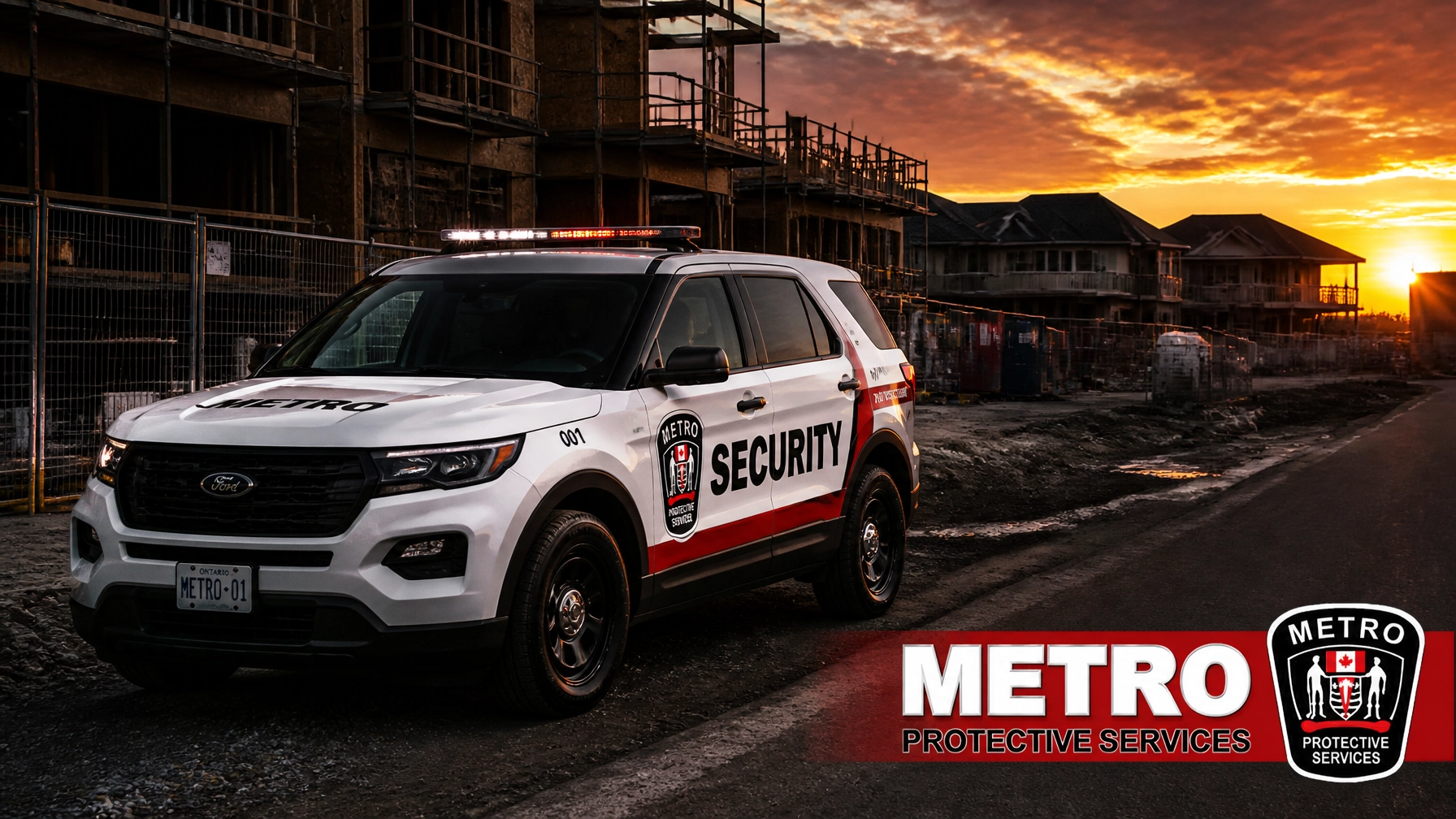
A properly planned mobile patrol schedule can help address these seasonal vulnerabilities. Metro Protective Services provides mobile patrol services in Toronto and across the GTA, supported by 24/7 dispatch coordination, GPS-monitored patrol check-ins, and daily electronic reporting through the Sky-Guard Monitoring System.
Why fall conditions require a specific patrol plan
Mobile patrols should not simply repeat a summer schedule as conditions change. In October, security teams must account for reduced visibility, changing weather, and different patterns of occupancy.
On October 12 in Toronto, sunset will occur at approximately 6:39 p.m. This means parking lots, loading areas, pedestrian routes, and construction perimeters will enter low-light conditions relatively early. Exterior lighting, access points, rear service lanes, and isolated areas should receive attention during dusk and after-hours patrols.
Wet leaves and light rain can also obscure damage, debris, standing water, and trip hazards. These conditions are relevant to both security and property liability. A patrol officer who identifies a blocked fire route, failed light, unsecured gate, or slippery access point can report the issue promptly so the responsible property team can take corrective action.
The Thanksgiving long weekend also creates a vacancy window. Before the weekend, a property should have a documented baseline inspection. During the weekend, patrols should verify that conditions remain unchanged. After the holiday, a follow-up inspection can identify unauthorized entry, vandalism, damage, or maintenance concerns that developed while regular staff were away.
Mobile patrol coverage for commercial plazas and retail properties
Commercial plazas can experience uneven activity during a holiday weekend. Some businesses may close, while restaurants, pharmacies, grocery stores, and other operations continue serving customers. This can leave certain areas active and others largely vacant.
A mobile patrol plan for a plaza or retail property may include:
- Exterior checks of storefronts, rear doors, loading areas, and garbage enclosures
- Inspection of parking-lot lighting, accessible spaces, fire routes, and pedestrian walkways
- Identification of abandoned vehicles, unauthorized overnight parking, and suspicious activity
- Verification that perimeter doors, gates, and service entrances are secured
- Response coordination for alarms, lockouts, or reported incidents
- Documentation of property damage, graffiti, broken windows, and water accumulation
Parking enforcement can be particularly useful when visitor spaces, fire routes, accessible spaces, or loading zones are misused. Enforcement should always follow the property’s written rules, posted signage, contractual requirements, and applicable municipal regulations. Any towing should be coordinated through an authorized provider rather than handled informally.
For property managers, the objective is not merely to issue notices. It is to maintain orderly access, preserve emergency routes, support tenants, and create a documented record of activity during a period when normal administrative oversight may be reduced.

Condo and apartment protection during the holiday vacancy period
Residential properties require a different approach because the building may remain occupied even when many residents are travelling. Mobile patrols can supplement lobby security and professional concierge services by extending coverage to areas that are not continuously staffed.
For condominiums and apartment buildings, fall patrols may include:
- Parking garages and visitor parking areas
- Exterior walkways, entrances, and delivery zones
- Mailrooms, amenity areas, elevators, and rooftop access points
- Mechanical rooms, storage areas, and emergency exits
- Access-control doors that may be propped open
- Wet leaves, standing water, failed lighting, and other maintenance hazards
A mobile unit can also respond when a concierge or building contact reports suspicious activity, a door alarm, a parking dispute, or an after-hours concern. This creates a coordinated security model: lobby personnel maintain a visible presence for residents and guests, while mobile patrol officers inspect the broader property and respond to issues outside the lobby.
Properties located near busy transit corridors, public gathering areas, shelters, rehabilitation facilities, or supervised consumption and injection sites may require additional planning based on observed activity at the specific location. The appropriate response should be professional and fact-based. Patrol officers should focus on access control, trespassing concerns, property damage, resident safety, and de-escalation rather than making assumptions about individuals or nearby services.
Construction and industrial site patrols after dark
Construction sites and industrial properties are particularly exposed during long weekends. Equipment, tools, fuel, copper, building materials, trailers, and temporary site infrastructure may remain on location while project staff are absent.
A pre-holiday patrol should verify:
- Temporary fencing and vehicle gates are secure
- Locks, chains, and access points are intact
- Generators, tools, fuel, and equipment are properly secured
- Scaffolding, ladders, and temporary structures are not accessible to unauthorized persons
- Site lighting and cameras are operating or reported for repair
- Standing water, wet plywood, leaves, and debris are not creating obvious hazards
- Trailers, loading areas, and utility access points show no signs of tampering
Patrol officers should follow the site’s safety rules and should not enter unsafe areas without authorization, training, and appropriate controls. Evidence of forced entry should be preserved and reported. Active emergencies involving fire, injury, major flooding, or immediate danger should be escalated to emergency services and the designated site contact.
Metro Protective Services provides construction site security and industrial and logistics security for properties that require structured after-hours oversight.

How Sky-Guard supports accountable patrol operations
A mobile patrol is most effective when the client can verify what was checked, when it was checked, and whether follow-up action was required.
Metro Protective Services uses the Sky-Guard Monitoring System to support GPS-monitored patrol check-ins and electronic reporting. This gives management a clearer operational record for scheduled and unscheduled patrol activity.
Depending on the assignment, daily electronic reports can document:
- Patrol times and locations
- Check-in activity
- Doors, gates, lighting, and perimeter conditions
- Parking and access-control concerns
- Photographs of damage or hazards
- Alarm responses and actions taken
- Matters requiring property-management follow-up
The system supports Metro’s 24/7 dispatch coordination. When an incident or additional request arises, the dispatch centre can coordinate the appropriate mobile supervisor or security resource. This is especially important during holiday periods when a property’s regular management team may be unavailable.
A practical Thanksgiving long-weekend checklist
Property managers and condo boards should complete the following steps before the holiday:
- Confirm the primary and secondary emergency contacts.
- Review access credentials, lockbox procedures, and key-management instructions.
- Identify priority patrol areas, including garages, loading docks, rear doors, and construction perimeters.
- Inspect exterior lighting and report failed fixtures.
- Remove or arrange removal of wet leaves and standing water from high-traffic areas.
- Confirm parking rules, signage, visitor procedures, and authorized towing contacts.
- Provide patrol officers with current site maps and escalation instructions.
- Schedule pre-holiday, evening, overnight, and post-holiday checks.
- Require time-stamped electronic reports and photographs where appropriate.
- Review all findings with the property team after the weekend.
These measures help distinguish normal seasonal conditions from security incidents, maintenance concerns, and issues requiring immediate attention.
Reliable security coverage for Toronto and the GTA
Metro Protective Services has served Toronto and the GTA since 2000. Our highly trained guards and mobile supervisors support commercial plazas, condominiums, construction sites, industrial properties, warehouses, retail locations, and other GTA facilities.
Our approach combines visible deterrence, responsive dispatch coordination, GPS-monitored patrol activity, daily electronic reporting, and competitive pricing. For organizations that require continuous coverage, mobile patrol can also be integrated with security guard services in Toronto and professional concierge services.
If your property will have reduced staffing during the Thanksgiving long weekend, now is the time to review its coverage plan.
Request a free site assessment from Metro Protective Services to discuss patrol frequency, parking enforcement, access points, reporting requirements, and seasonal risks. You can also call 416-240-0911 or use the company’s contact page to submit an inquiry.
Need Help? Chat with us
The Metro Protective Services team is available to discuss your property’s security requirements.
Recent Posts
- Why Real-Time GPS Reporting Will Change the Way You View Your Security Guard Services in Toronto
- 7 Mistakes You’re Making With Construction Site Security and How to Fix Them
- How to Choose the Best Loss Prevention Services in Toronto: 2026 Comparison Guide
Tags: mobile patrol services Toronto, security guard services Toronto, parking enforcement, condo security, construction site security, industrial security, GTA property protection, Thanksgiving weekend security

