

-
info@Metroprotective.ca
Send Email
-
Toronto – Hamilton – London – Windsor
Metro Protective Services
Tel: 416-240-0911
Confidentiality Guaranteed
Tel: 416-240-0911
Confidentiality Guaranteed
13
Sep
Sep
Comprehensive Security Guard and Property Protection Services in Toronto and the GTA
Breadcrumb: Home > Blog > Retail Loss Prevention and Commercial Security
Published: September 13, 2026
Category: Retail Loss Prevention and Commercial Security
Tags: security guard services Toronto, construction site security services, concierge security services, residential security Toronto, mobile patrol services Toronto, retail loss prevention, commercial property security, Sky-Guard Monitoring System
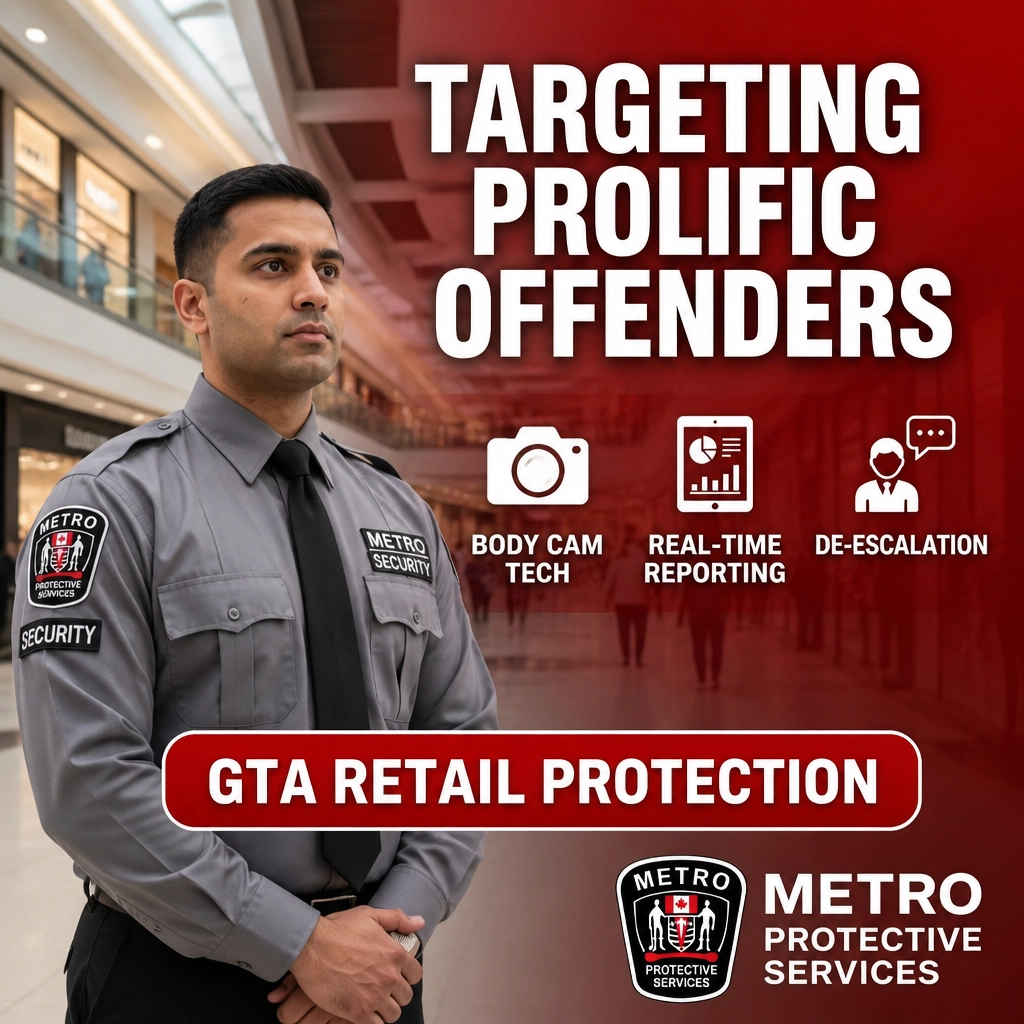
Fall brings changing merchandise, increased promotions, longer shopping periods, and heavier customer traffic across Toronto and the GTA. For retail stores, shopping centres, plazas, and mixed-use commercial properties, these seasonal changes can create additional opportunities for theft, organized retail crime, property damage, and after-hours intrusion.
A practical fall security program should do more than place a guard at a front entrance. It should connect loss prevention officers, property security, mobile patrol units, tenant staff, and commercial concierge teams through clearly defined procedures. It should also produce reliable information that property managers can use to measure activity, identify recurring vulnerabilities, and adjust coverage.
Metro Protective Services has served Toronto and the GTA since 2000. Our approach combines trained security professionals, 24/7 dispatch coordination, mobile patrol services, concierge security services, and the Sky-Guard Monitoring System, which uses GPS check-ins and daily electronic reports to support accountable protection.
Build a Fall Loss Prevention Plan Around Specific Risk Periods
Fall security planning should begin with the property’s previous incident history. Reviewing last year’s theft reports, access issues, property damage, and high-risk time periods helps determine where additional coverage will have the greatest effect.
Property managers should identify:
- High-loss departments and merchandise categories.
- Store entrances and exits with limited visibility.
- Fitting rooms, loading areas, and service corridors requiring additional attention.
- Weekends, promotional events, paydays, and extended shopping hours.
- Times when staffing levels change between daytime, evening, and closing operations.
- Parking areas, vacant units, and exterior spaces that become more vulnerable after dark.
The objective is not to apply the same security schedule everywhere. It is to place the right level of professional coverage where and when it is most needed.
During high-traffic periods, a visible security presence can discourage opportunistic theft while also supporting safe customer movement. A licensed officer may be assigned to the entrance, conduct floor patrols, monitor key areas, or coordinate with store management depending on the site’s risk assessment and operating procedures.
Strengthen Door, Exit, and High-Value Merchandise Coverage
Entrances and exits are important control points in any retail loss prevention program. They should remain visible, well-lit, and connected to a defined response procedure.
A fall-season review should confirm that:
- Security officers and store personnel understand who is responsible for each entrance and exit.
- Emergency exits remain accessible while being monitored for unauthorized use.
- Camera sightlines cover customer flow and exterior approaches.
- Door alarms, access controls, and other protective systems are operational.
- Staff know how to report suspicious activity without creating unnecessary confrontation.
- Incident information can be communicated quickly to property security and management.
High-value merchandise should be positioned in areas with strong visibility and regular staff activity. Depending on the retail environment, this may include locked displays, controlled-access cases, placement near staffed counters, or additional patrol attention.
Loss prevention officers should focus on professional observation, documentation, and safe escalation. The purpose of security coverage is to protect employees, customers, and property while following applicable policies and legal requirements.

Manage Fitting Rooms and High-Risk Retail Zones
Fitting rooms can create concealment opportunities when they are not properly supervised. They should be included in the site-specific fall security plan, particularly for apparel, accessories, and other merchandise categories with elevated shrink risk.
Practical controls may include:
- Assigning an attendant or patrol responsibility during peak shopping periods.
- Limiting the number of items taken into a fitting room.
- Recording merchandise entering and leaving when appropriate.
- Checking surrounding corridors and nearby displays for abandoned packaging or tags.
- Maintaining clear sightlines around fitting-room approaches.
- Using cameras only in permitted public areas, never inside fitting rooms.
- Ensuring that adjacent corridors are well-lit and free of unnecessary obstructions.
These procedures should be applied consistently and respectfully. A professional security officer supports store policy and customer safety without compromising privacy.
Recognize Organized Retail Crime Indicators
Organized retail crime can involve coordinated groups, repeat visits, distraction tactics, rapid grab-and-run activity, or attempts to move stolen merchandise through multiple locations. Retail employees and security personnel should be trained to recognize patterns rather than relying on assumptions about individual customers.
Useful indicators may include:
- Several people entering with coordinated roles.
- One person distracting employees while another accesses high-value merchandise.
- Repeated visits to the same department without normal shopping activity.
- Attempts to block staff sightlines or interfere with security procedures.
- Merchandise being moved toward a side exit, washroom, loading area, or vehicle.
- Unusual activity across multiple stores within the same plaza or shopping centre.
A property-wide response is especially important in multi-tenant environments. Tenant loss prevention officers, property security, and management should have a defined process for sharing incident details, preserving video, documenting descriptions, and contacting emergency services when required.
Metro Protective Services can support these environments through professional security guard services Toronto businesses rely on for visible deterrence, incident response, and coordinated commercial property protection.
Extend Protection Beyond Store Hours
Retail and commercial properties remain vulnerable after stores close. Vacant units, rear service doors, loading zones, parking areas, garbage enclosures, and shared walkways may receive less attention during overnight hours.
A practical after-hours program may include:
- Lock-and-unlock services.
- Exterior perimeter checks.
- Parking-lot and common-area patrols.
- Inspection of doors, gates, windows, and loading areas.
- Response to alarms or reports of suspicious activity.
- Checks of vacant units and construction interfaces.
- Coordination with property management when damage or maintenance concerns are identified.

Mobile patrol services Toronto property managers use can extend coverage across multiple stores, plazas, and commercial sites. A marked patrol vehicle provides a visible deterrent, while scheduled and randomized inspections help reduce predictable gaps in protection.
Mobile patrol can also support related commercial operations. For example, businesses requiring construction site security services during a renovation or expansion may coordinate patrols between the active construction area, retail entrances, and shared parking facilities.
Coordinate Retail Security with Concierge and Property Teams
Mixed-use properties require a unified security plan because commercial retail areas may share entrances, parking structures, elevators, loading zones, and public corridors with residential tenants.
At these properties, concierge security services can provide an important communication link between retailers, residents, visitors, contractors, and property management. A concierge security officer may monitor access points, manage visitor procedures, identify unusual activity, and communicate with mobile patrol or dispatch when assistance is required.
The same coordination model can support residential security Toronto property managers need when residential towers are connected to retail podiums or shopping areas. Security procedures should clarify:
- Which doors are public, tenant-only, or restricted.
- How retail incidents are communicated to residential security staff.
- How parking and loading-area concerns are escalated.
- Who manages after-hours contractor access.
- How property-wide incidents are documented and reviewed.
This structure helps avoid isolated responses. A security issue that begins at a retail entrance may affect a residential lobby, parking garage, or service corridor within minutes.

Use Sky-Guard Reporting to Measure Results
A loss prevention program should produce more than anecdotal observations. Property managers need timely information about patrol completion, recurring incidents, maintenance concerns, access issues, and areas requiring additional attention.
The Sky-Guard Monitoring System supports this process through:
- GPS check-ins that verify patrol activity.
- Electronic records of assigned site duties.
- Time-stamped incident documentation.
- Daily electronic reports for management review.
- Information that can help identify recurring locations and time periods.
- Improved communication between field officers, supervisors, and the 24/7 dispatch centre.

Daily electronic reports help property managers compare planned coverage with actual activity. Over time, these reports can support decisions about staffing during peak periods, mobile patrol frequency, entrance coverage, and recurring property maintenance issues that may contribute to security risk.
Technology does not replace trained personnel. It gives managers better visibility into the work being completed and creates a more reliable basis for improving the program.
A Practical Fall Review Checklist
Before the fall season reaches its busiest periods, retail and commercial property managers should confirm that:
- Coverage has been reviewed against previous incidents and seasonal schedules.
- High-value merchandise and fitting-room procedures are clearly defined.
- Entrance, exit, and emergency-door responsibilities are assigned.
- Security personnel know how to document organized retail crime indicators.
- Retail tenants and property security share an incident communication process.
- After-hours patrol routes include parking, loading, vacant, and common areas.
- Mixed-use properties have clear coordination between retail security and concierge teams.
- Sky-Guard GPS check-ins and daily electronic reports are active.
- Managers know how to review reports and escalate recurring concerns.
Metro Protective Services has provided professional protection throughout Toronto and the GTA since 2000. Our services include security guards, retail loss prevention officers, mobile patrol, parking enforcement, concierge security, 24/7 dispatch coordination, and the Sky-Guard Monitoring System.
A fall security program should be visible, measurable, and adapted to the property’s actual risk profile. With the right combination of trained personnel, coordinated coverage, and electronic reporting, retailers and property managers can reduce vulnerabilities while maintaining a safe and professional environment for customers, tenants, and staff.
Need Help? Chat with us
Need Help? Chat with us to discuss a practical fall retail loss prevention and commercial property protection plan.
Metro Protective Services
Phone: 416-240-0911
Email: info@metroprotective.ca
WhatsApp: Start a conversation
Contact page: Submit now
Recent Posts
- Does 24/7 Dispatch Really Matter in 2026? The Truth About Toronto Security
- Comprehensive Security Guard and Property Protection Services in Toronto and the GTA
- Mobile Patrol for Shopping Centres and Retail Plazas: Extending Mall Security Coverage
- How to Choose the Best Loss Prevention Services in Toronto: 2026 Comparison Guide
- Why Your Toronto Condo Needs More Than Just a Front Desk: The Concierge Security Advantage

