

-
info@Metroprotective.ca
Send Email
-
Toronto – Hamilton – London – Windsor
Metro Protective Services
Tel: 416-240-0911
Confidentiality Guaranteed
Tel: 416-240-0911
Confidentiality Guaranteed
09
Sep
Sep
Food Courts, Washrooms, and Common Areas: Closing the Security Gaps Inside a Mall
Breadcrumbs: Home → Security Services → Retail / Commercial Security → Mall Common-Area Security
Published: August 29, 2026
Series: Mall Security Series : Article 11 of 14
Category: Mall Security and Retail Protection
Tags: mall security Toronto, security guard services Toronto, retail loss prevention, commercial security services GTA, shopping centre security, common-area patrols
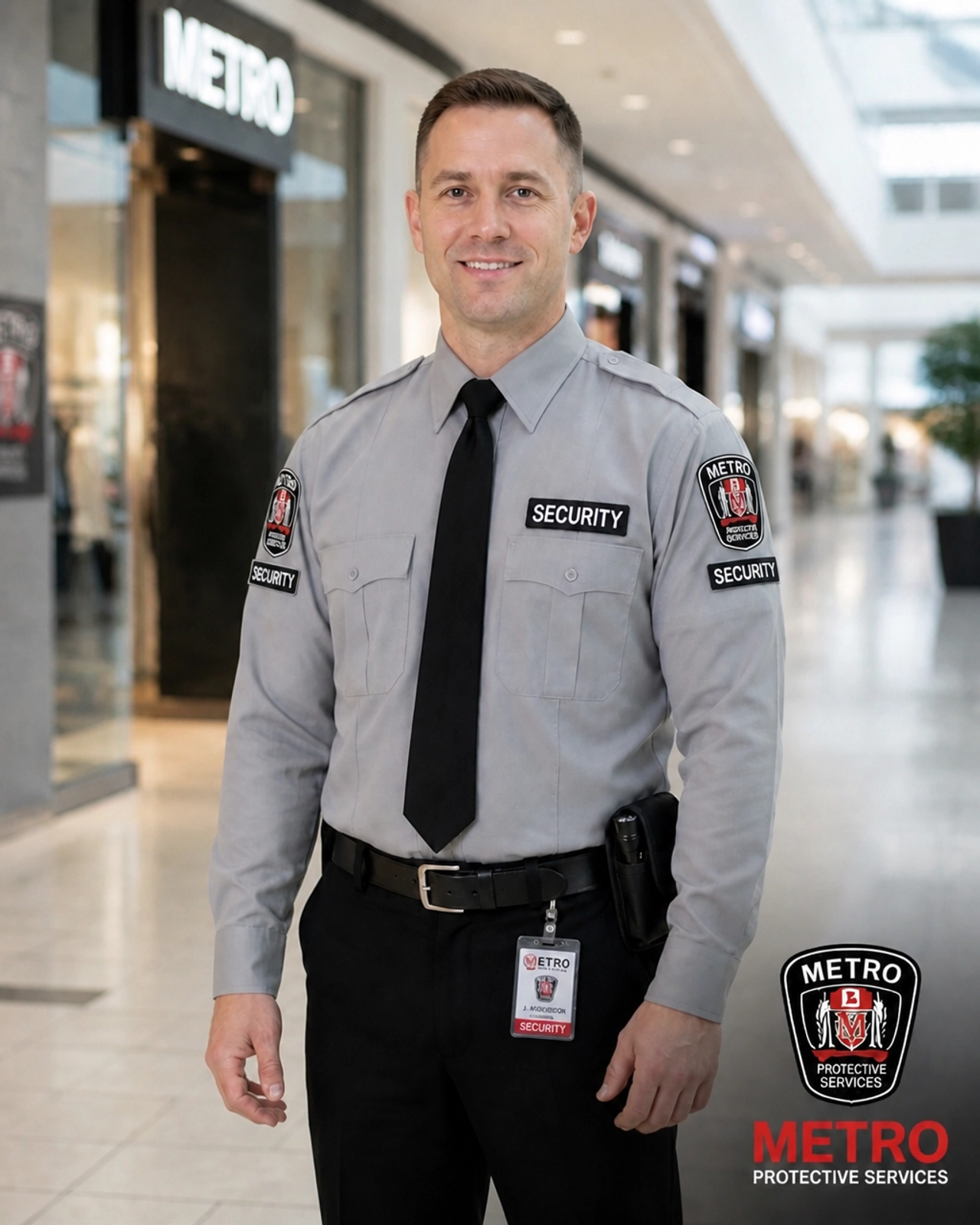
Shopping mall security is not limited to storefronts, loading docks, or parking areas. Food courts, washroom corridors, elevators, stairwells, seating areas, family rooms, and customer-service zones are equally important parts of the property’s security environment.
These spaces are used by large numbers of visitors throughout the day. They also involve extended dwell times, reduced visibility, medical concerns, customer-service interactions, and frequent transitions between tenants and mall operations. When common-area responsibilities are not clearly assigned, small issues can become larger incidents.
A properly designed common-area security program combines visible patrols, timely reporting, respectful customer assistance, and close coordination with cleaning, maintenance, property management, tenants, and emergency responders.
Why Interior Common Areas Require Specialized Attention
Common areas have different security requirements from retail sales floors. A food court may contain crowded queues, hot surfaces, spills, discarded bags, and large groups of customers. Washroom approaches and family rooms require privacy-sensitive inspections and fast response to safety concerns. Elevators and stairwells can create isolated points of contact, while customer-service areas may involve complaints, disputes, or distressed visitors.
The objective is not to treat every customer as a potential threat. It is to ensure that the mall has a consistent process for identifying hazards, assisting people in need, documenting incidents, and escalating concerns when appropriate.
For property managers, this means security post orders should specifically identify interior common areas rather than referring generally to “mall patrols.”
1. Establish Visible, Structured Patrol Coverage
A uniformed security officer provides reassurance when the presence is professional, approachable, and consistent. Patrols should cover the full interior property, with particular attention to locations that experience heavy traffic or have limited natural visibility.
A mall security Toronto program may include:
- Food courts during lunch, dinner, weekends, holidays, and special promotions.
- Washroom entrances, adjacent corridors, and family rooms at scheduled intervals.
- Elevators and stairwells, including landings and emergency exits.
- Seating areas where customers may remain for extended periods.
- Customer-service desks, guest-services counters, and information areas.
- Corridors connecting anchor tenants, parking access points, and transit entrances.
- Areas affected by construction, temporary closures, or maintenance work.
Patrols should be regular but not unnecessarily predictable. Security supervisors can adjust routes based on time of day, occupancy, event schedules, incident history, and information received from mall operations.

2. Report Cleanliness and Maintenance Issues Before They Become Safety Incidents
Security guards are often among the first personnel to identify conditions that could cause injury or disrupt operations. A spill in a food court, a damaged handrail, a burned-out light, or a blocked accessible route may initially appear to be a maintenance matter. It is also a safety concern.
Guards should promptly report and, where appropriate, help isolate:
- Wet floors, food spills, broken tiles, and trip hazards.
- Damaged doors, locks, handrails, benches, or washroom fixtures.
- Poor lighting in stairwells, corridors, and elevator areas.
- Overflowing waste bins or discarded materials.
- Blocked emergency exits, ramps, elevators, or accessible pathways.
- Malfunctioning automatic doors and customer-service equipment.
- Unusual odours, water leaks, smoke, or signs of electrical problems.
Electronic reporting allows management to identify recurring issues, confirm when a concern was discovered, and track whether the responsible department completed the required action. It also creates a more reliable record than informal verbal handoffs between shifts.
Security should not replace maintenance personnel. Its role is to identify the condition, protect people from immediate harm, notify the correct department, and document the response.
3. Manage Unattended Items Carefully and Consistently
Backpacks, shopping bags, luggage, and parcels are common in shopping centres. Most unattended items are not dangerous, but each item should be handled according to the property’s established procedure.
The process should include:
- Observe the item from a safe distance without touching or moving it.
- Ask nearby staff or customers whether they know the owner, when it is safe to do so.
- Notify the security supervisor and mall operations.
- Review available camera coverage and the item’s location.
- Establish a controlled area if the item appears suspicious or remains unidentified.
- Contact police or emergency services according to the mall’s escalation protocol.
- Record the time, location, description, actions taken, and final outcome.
Food courts, seating areas, washroom corridors, and elevator lobbies require particular attention because items can be left among tables, benches, waste receptacles, or temporary displays.
Guards should never open, move, or examine a suspicious package. The correct response is controlled observation, communication, isolation where necessary, and escalation through the approved chain of command.
4. Prepare for Medical Concerns and Vulnerable Customers
Medical events can occur anywhere in a mall, including food courts, washrooms, family rooms, elevators, and seating areas. Choking, falls, allergic reactions, diabetic emergencies, cardiac events, and other concerns require a prompt and organized response.
Effective security guard services Toronto programs should define:
- How a medical call is received and prioritized.
- Which radio channel or communication process is used.
- Where first-aid equipment and AEDs are located.
- Which personnel are trained in first aid, CPR, and AED use.
- How EMS is directed through the property.
- Who manages bystanders and protects the individual’s privacy.
- How the incident is documented after the immediate response.
In a washroom or family-room incident, guards should respect privacy while confirming that assistance is being provided. Depending on the circumstances, a same-gender officer, mall employee, supervisor, or emergency responder may be appropriate. The priority is safety, dignity, and prompt access to qualified medical care.
Officers should also be prepared to assist customers who are lost, separated from family members, distressed, have mobility limitations, or require clear directions. Accessibility should be integrated into everyday patrol duties: not considered only during an evacuation.
5. Use De-Escalation in High-Traffic Areas
Food courts and customer-service zones can become points of tension when customers disagree about seating, queues, refunds, noise, or other mall policies. Security officers should intervene early when there are signs of escalating conduct, while avoiding unnecessary confrontation.
A professional response generally includes:
- Approaching calmly and identifying oneself.
- Maintaining appropriate distance and a clear route of exit.
- Using concise, respectful instructions.
- Listening briefly to establish the immediate concern.
- Separating involved parties when possible.
- Moving the conversation away from crowds without forcing compliance.
- Requesting a supervisor or mall manager when a policy decision is required.
- Calling police or emergency services for violence, credible threats, weapons, or serious criminal conduct.
The purpose of de-escalation is to reduce risk, not to win an argument. Security guards should remain within their authority, avoid inflammatory language, and follow the mall’s approved use-of-force and incident-response procedures.

6. Coordinate Security with Mall Operations
Common-area security is most effective when it operates as part of the mall’s broader management system. Security supervisors should maintain regular communication with property management, cleaning contractors, maintenance teams, tenant representatives, customer-service staff, and event coordinators.
Useful coordination practices include:
- Daily briefings covering incidents, closures, events, and operational changes.
- Shared procedures for spills, hazards, suspicious items, medical events, and disruptive conduct.
- Clear contact lists and escalation responsibilities.
- Defined access routes for police, fire, and EMS.
- Regular reviews of incident trends and repeat problem areas.
- Post-incident meetings after significant events.
- Electronic reports that identify location, time, action taken, and follow-up requirements.
This coordination also supports retail loss prevention. While tenant teams may focus on merchandise protection inside individual stores, mall security can monitor shared corridors, entrances, food courts, and transition points. Information can be shared appropriately and lawfully without compromising customer privacy.
Common-Area Security Checklist for Mall Managers
Use the following checklist when reviewing an existing program:
- Are food courts assigned specific patrol coverage during peak periods?
- Are washroom approaches, family rooms, elevators, and stairwells included in post orders?
- Are guards trained to report spills, damage, lighting problems, and blocked access routes?
- Is there a documented unattended-item procedure?
- Are first-aid kits and AEDs clearly identified to security personnel?
- Are EMS access routes and staging points known to every shift?
- Do officers receive de-escalation and customer-assistance training?
- Are accessible routes, ramps, elevators, and emergency exits kept clear?
- Does mall operations receive timely electronic reports?
- Are recurring issues reviewed by management and security supervisors?
Why Metro Protective Services Supports Mall Operations
Since 2000, Metro Protective Services has provided professional security support for retail, commercial, and shopping-centre environments across Toronto and the GTA. Our trained guards are selected and prepared to provide visible deterrence, customer assistance, incident response, and detailed operational reporting.
Our services can be structured around a mall’s operating hours, peak traffic periods, tenant requirements, event calendar, and interior layout. With 24/7 dispatch coordination, supervisory oversight, and electronic reporting, property managers receive a clearer understanding of what is happening throughout the site: not only when a serious incident occurs.
For broader property requirements, Metro also provides retail and commercial security, retail loss prevention, concierge services, and other security services.
Recent Posts
- Top-Rated Security Guard and Property Protection Services in Toronto and the GTA
- Comprehensive Security Guard and Property Protection Services in Toronto and the GTA
- The Ultimate Guide to Commercial Security Services GTA
Need Help Reviewing Mall Common-Area Security?
A safer mall environment depends on consistent coverage, clear responsibilities, and prompt communication between security and operations. Metro Protective Services can help property managers assess patrol requirements and develop a practical service plan for food courts, washrooms, corridors, elevators, stairwells, and other shared spaces.
Contact Metro Protective Services or submit an inquiry to discuss your mall security requirements with our team.

