

-
info@Metroprotective.ca
Send Email
-
Toronto – Hamilton – London – Windsor
Metro Protective Services
Tel: 416-240-0911
Confidentiality Guaranteed
Tel: 416-240-0911
Confidentiality Guaranteed
02
Sep
Sep
Comprehensive Security Guard and Property Protection Services in Toronto and the GTA
Home > Blog > Construction Site Security
Published: September 2, 2026
Category: Construction Site Security
Tags: construction site security services, security guard services Toronto, mobile patrol services Toronto, property protection, GTA security
As the post-Labour Day construction season ramps up across Toronto and the GTA, active sites are entering a period of renewed security risk. New crews and subcontractors are arriving, materials and equipment are being staged, fencing and hoarding may be adjusted, and projects are transitioning between phases.
These changes can create temporary gaps in access control, perimeter coverage, and asset protection. A site that was properly secured during one stage of construction may require a different security plan as the layout, workforce, and risk profile change.
For developers, general contractors, and property managers, fall is an appropriate time to review site security procedures and confirm that every control remains aligned with current operations. Metro Protective Services has provided professional protection across Toronto and the GTA since 2000. Our construction security programs combine trained security guards, 24/7 dispatch coordination, mobile patrol support, and the Sky-Guard Monitoring System for GPS check-ins and daily electronic reporting.
Why Fall Ramp-Up Requires a Construction Security Review
Construction sites are not static environments. Each project phase changes the location of entrances, storage areas, trailers, lighting, scaffolding, heavy equipment, and temporary structures. These changes can create new blind spots or make previous patrol routes ineffective.
The return of larger crews after the summer period can also increase the number of workers, vehicles, deliveries, and visitors moving through the property. If contractor lists and access procedures are not updated, unauthorized individuals may be able to enter alongside legitimate workers.
Common fall security concerns include:
- Unverified workers or subcontractors entering through active gates
- Tools, copper, fuel, fixtures, and other materials being staged in exposed areas
- Construction equipment left unattended during evenings and weekends
- Hoarding, fencing, or gates being moved without corresponding security updates
- Patrol routes that no longer cover important sections of the site
- Reduced daylight creating poorly monitored areas after working hours
- Delayed communication when an incident occurs overnight
A practical security review should take place whenever a project changes phase, site access is modified, or a new group of contractors begins work.
1. Tighten Gate and Access Control When New Crews Start
The gate is the first point at which a construction site can distinguish authorized personnel from unauthorized visitors. During a fall ramp-up, access procedures should be reviewed before new crews arrive rather than after problems occur.
A professional security guard assigned to the entrance can help manage:
- Worker and subcontractor identification
- Approved contractor and vendor lists
- Delivery schedules and vehicle access
- Visitor sign-in and escort requirements
- Entry and exit times
- Site-specific PPE and safety requirements
- Authorization for removing tools, equipment, or materials
The general contractor or site manager should provide current access lists and clearly identify who is authorized to approve exceptions. Security personnel should also have written post orders that explain how to handle deliveries, unexpected visitors, after-hours access, and requests to remove property from the site.
For larger developments, it is useful to separate routine worker entry from delivery access where possible. This reduces congestion and makes it easier to identify vehicles that do not match the expected schedule.

2. Verify Contractor and Subcontractor Authorization
A construction site may involve dozens of contractors and subcontractors, particularly as framing, mechanical, electrical, finishing, and landscaping activities overlap. It is not sufficient to recognize a company name or assume that a person wearing work clothing is authorized to enter.
Authorization procedures should confirm:
- The individual’s name and company
- The work assignment or reason for attending
- Whether the person is expected on that date and shift
- Whether the vehicle and delivery documentation match the visit
- Whether the person has permission to access the relevant area
Site management should communicate changes promptly. When a subcontractor is added, removed, or reassigned, the guard post and dispatch team should receive the update. A current list is more effective than a general instruction to “allow contractors in.”
Metro Protective Services can work with site managers to establish practical verification procedures that support construction operations without creating unnecessary delays. The objective is controlled access, not disruption.
3. Secure Staged Materials, Tools, and Equipment
Materials are often most vulnerable when they are delivered before installation. Staged copper, wiring, fixtures, power tools, fuel, and specialized equipment can remain on site overnight during busy project periods.
A layered asset protection plan should include:
- A centralized, well-lit storage area for high-value materials
- Locked containers with controlled key or access-code management
- Inventory records for tools and equipment
- Clear procedures for removing property from the site
- Lighting inspections around storage areas and trailers
- Patrol checkpoints at laydown yards and equipment zones
- Immediate reporting of damaged locks, cut fencing, or disturbed materials
Security guards should know which assets are most important during the current construction phase. The risk profile during mechanical and electrical work may differ from the risk profile during finishing or occupancy preparation. Patrol attention should be adjusted accordingly.

4. Reassess Patrol Routes as the Site Layout Changes
A patrol route designed during excavation may not be appropriate once a building envelope is closed or interior work begins. New hoarding, temporary roads, scaffolding, storage areas, and access points can change how a guard should move through the property.
Before the fall ramp-up, the security provider and site manager should conduct a current site walk. The review should identify:
- Active and secondary entrances
- Fence lines, gates, and areas vulnerable to tampering
- Material staging zones
- Site trailers and offices
- Fuel and generator locations
- Equipment yards
- Dark or obstructed areas
- Fire exits and emergency access routes
- Areas affected by recent construction activity
Patrols should include both predictable checkpoints and appropriate variation in timing. Consistent coverage is necessary, but a completely predictable routine can make it easier for an intruder to identify periods of limited visibility.
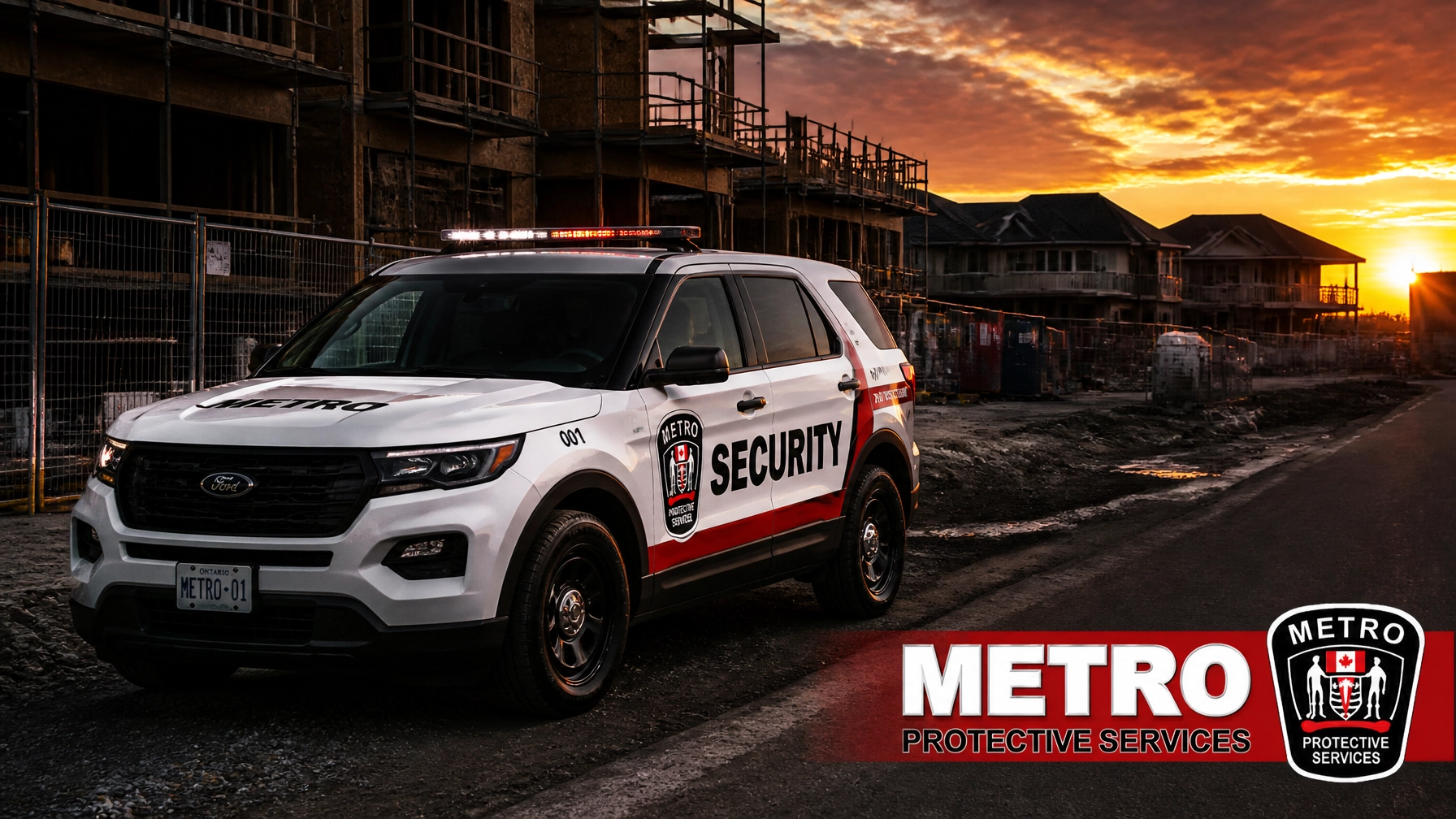
On large or irregular properties, onsite security guards can be supported by mobile patrol services in Toronto. A marked Metro Protective Services vehicle can conduct perimeter sweeps, respond to alarms, and provide additional coverage during evenings, weekends, and high-risk transition periods.

5. Coordinate Every Shift Through 24/7 Dispatch
Construction site security is more effective when guards, supervisors, site management, and dispatch operate from the same information. A 24/7 dispatch centre provides an ongoing point of coordination when site conditions change or an incident occurs outside normal office hours.
Dispatch coordination can support:
- Guard attendance and shift coverage
- Missed or delayed patrol checks
- Emergency escalation
- Supervisor response
- Communication with authorized site contacts
- Mobile patrol deployment
- Documentation of incidents and follow-up actions
The site’s emergency contact list should be reviewed regularly. It should include the appropriate project manager, superintendent, property representative, and emergency contacts. Outdated phone numbers can delay decisions at the exact time a response is required.
Clear escalation instructions are equally important. Guards should know when to contact dispatch, when to notify site management, and when emergency services are required.
6. Use Sky-Guard for Verifiable Reporting
Paper logs can provide useful information, but they do not offer the same level of visibility as GPS-supported electronic reporting. Metro Protective Services uses the Sky-Guard Monitoring System to support accountability across construction and other commercial properties.
With Sky-Guard, guards can complete GPS check-ins at designated points throughout the site. These checkpoints may include the main gate, perimeter corners, equipment areas, storage containers, site trailers, and other locations identified during the security assessment.
The system supports:
- GPS-verified patrol check-ins
- Time-stamped activity records
- Electronic incident reports
- Photographs attached to reports where appropriate
- Documentation of site conditions
- Daily electronic reports for management review
- Dispatch follow-up when a checkpoint is missed or an issue is reported
For property managers overseeing several GTA projects, daily electronic reports provide a consistent record of completed patrol activity and reported conditions. They can also help identify recurring issues, such as damaged fencing, unreliable lighting, or unauthorized access attempts.
Technology does not replace professional judgment. It gives trained guards and dispatch personnel a stronger method of documenting what occurred and where it occurred.
A Layered Security Plan for Every Construction Phase
Effective construction site security services should be adjusted as the project develops. Some sites require a dedicated entrance guard during active work hours and mobile patrol support overnight. Others may need continuous coverage because of the value of materials, site location, project scale, or exposure to vandalism and trespassing.
Metro Protective Services can help developers, general contractors, and property managers build a practical plan that combines:
- Professional security guard services Toronto businesses can rely on
- Gate and access control
- Contractor and visitor verification
- Perimeter and interior patrols
- Mobile patrol backup
- 24/7 dispatch coordination
- Sky-Guard GPS check-ins
- Daily electronic reporting
When a residential development approaches occupancy, the security plan may transition from construction protection to lobby, access, and resident-facing services. At that stage, concierge security services can support controlled entry, visitor management, front-desk coverage, and professional lobby security. This creates continuity as a project moves from an active worksite into a completed residential property requiring residential security in Toronto.
Protect the Fall Construction Ramp-Up
The post-Labour Day period is an important opportunity to confirm that construction site security procedures reflect current conditions. New crews, changing layouts, staged assets, and shorter daylight hours should result in a documented review of access control, patrol coverage, dispatch procedures, and reporting requirements.
Since 2000, Metro Protective Services has supported construction, industrial, commercial, and residential properties throughout Toronto and the GTA. Our team can assess your site and recommend a security model based on its phase, layout, operating schedule, and risk profile.
Need Help? Chat with Us
Request a construction site security assessment and discuss coverage for your fall ramp-up.
Metro Protective Services
Toronto and the GTA
416-240-0911
info@metroprotective.ca
Submit a Request for a Quote
Chat with Metro Protective Services on WhatsApp
Recent Posts
- The Ultimate Guide to Commercial Security Services GTA: Everything You Need to Succeed in 2026
- Mall Security in Toronto: Building a Strong Access-Control and Entrance-Management Plan
- Comprehensive Security Guard and Property Protection Services in Toronto and the GTA
Leave a Comment
Have you updated your construction site security plan for the fall ramp-up? Share your question below, or contact our team directly for prompt assistance.

