

-
info@Metroprotective.ca
Send Email
-
Toronto – Hamilton – London – Windsor
Metro Protective Services
Tel: 416-240-0911
Confidentiality Guaranteed
Tel: 416-240-0911
Confidentiality Guaranteed
31
Aug
Aug
Shopping Mall Parking Lot Security: Protecting Vehicles, Pedestrians, and Retail Access
Breadcrumbs: Home > Blog > Mall Security > Parking Lot and Garage Security
Published: August 29, 2026
Category: Mall Security
Tags: Mall Security Toronto, Parking Lot Security, Parking Garage Security, Mobile Patrol, Retail Property Protection, Security Guard Services Toronto
Shopping mall parking areas are often the first and last point of contact for customers, employees, contractors, and delivery personnel. They are also among the most operationally complex parts of a retail property. Surface lots, parking garages, access roads, loading zones, pedestrian routes, and tenant entrances must remain safe and accessible throughout changing conditions.
A comprehensive parking security plan protects more than vehicles. It supports pedestrian safety, preserves emergency access, reduces unauthorized parking, assists tenants, and provides a visible security presence during peak shopping periods and after closing.
For property managers evaluating mall security Toronto solutions, the most effective approach is layered coverage using static security guards, mobile patrols, and a 24/7 dispatch centre. Metro Protective Services has served Toronto and the GTA since 2000, providing trained security personnel, mobile patrol and parking enforcement, dispatch coordination, and detailed electronic reporting for commercial properties.
Why Parking Areas Require Dedicated Security
Parking lots and garages combine vehicle movement, public access, limited visibility, and extended operating hours. Risk can change quickly depending on weather, seasonal shopping demand, tenant schedules, special events, and the time of day.
Common concerns include:
- Vehicle break-ins, theft, and property damage
- Pedestrian-vehicle conflicts near entrances and crosswalks
- Poor visibility in isolated areas, stairwells, and upper garage levels
- Unauthorized parking or vehicle storage
- Misuse of accessible parking spaces
- Blocked fire routes, loading zones, and emergency access lanes
- Loitering, trespassing, or suspicious activity
- Delivery and contractor access outside approved schedules
- Customer assistance requests and medical emergencies
Security planning should be based on the mall’s layout, operating hours, incident history, tenant mix, parking capacity, and surrounding environment. A large enclosed garage requires a different deployment model than an open-air plaza, but both benefit from clear procedures and consistent oversight.
1. Improve Lighting and Perimeter Visibility
Adequate lighting is one of the foundations of parking area safety. Mall management should identify dark spots, damaged fixtures, areas affected by shadows, and locations where lighting does not adequately cover pedestrian routes or vehicle lanes.
The City of Toronto states that parking lots, walkways, stairs, loading docks, ramps, and similar areas must have sufficient lighting to support safe movement. Its parking lot and garage guidance identifies a minimum light level of 10 lux at ground level or on stair treads, including corners, intersections, stairs, and ramps. Property managers should confirm current requirements and arrange regular inspections.
Security teams can support lighting management by recording:
- Burned-out or damaged fixtures
- Dark areas created by landscaping or construction
- Obstructed sight lines near entrances and exits
- Malfunctioning emergency phones or intercoms
- Visibility concerns in stairwells and elevator lobbies
Perimeter visibility is equally important. Fences, retaining walls, landscaping, signage, dumpsters, and temporary structures should not create concealed areas where unauthorized activity can go unnoticed. Mobile patrol officers can inspect these areas during scheduled and unscheduled rounds and report maintenance issues promptly.

2. Establish Safe Pedestrian Routes
Customers frequently walk through parking areas while carrying shopping bags, assisting children, or using mobility devices. Pedestrian routes should therefore be clearly marked, well illuminated, and separated from vehicle lanes wherever practical.
A parking security review should examine:
- Crosswalk locations and visibility
- Curb ramps and accessible pathways
- Routes between public transit stops and entrances
- Areas near cart corrals and shopping-cart storage
- Pedestrian movement between parking levels and elevators
- Staff walking routes used before opening or after closing
- Locations where vehicles queue near mall entrances
Security guards should maintain a visible presence near high-traffic entrances during opening, closing, and peak shopping periods. Officers can assist with traffic direction, report hazards, support customers who require help, and identify unsafe driving behaviour before it results in an incident.
For multi-level garages, stairwells and elevator lobbies deserve particular attention. These areas should be included in patrol schedules, with officers checking for unsecured doors, damaged lighting, blocked exits, suspicious activity, and maintenance concerns.
3. Manage Vehicle Checks and Parking Access
Vehicle checks should be conducted according to the property’s written policies and applicable legal requirements. In most mall environments, this means observing vehicle activity, validating permits or authorization where applicable, monitoring entry and exit points, and documenting incidents. It does not automatically mean searching vehicles or personal property.
Appropriate parking security procedures may include:
- Monitoring public and employee parking entrances
- Recording suspicious or abandoned vehicles
- Verifying contractor and delivery access
- Observing unusual vehicle behaviour or repeated circulation
- Checking designated staff parking areas
- Identifying vehicles parked in restricted zones
- Reporting damage, collisions, and vehicle break-ins
- Supporting approved parking enforcement procedures
Clear signs are important. Customers and visitors should be able to understand parking time limits, towing conditions, accessible-space requirements, fire-route restrictions, and employee-only areas. Consistent enforcement supported by professional communication can reduce disputes and improve compliance.
4. Protect Accessible Spaces and Fire Routes
Accessible parking spaces must remain available for customers who need them. These spaces should be clearly marked, well lit, located near accessible entrances, and connected to safe pedestrian routes.
Security personnel can help protect accessible parking by:
- Conducting regular visual checks
- Reporting vehicles that appear to misuse designated spaces
- Keeping access aisles clear
- Monitoring nearby curb ramps and pedestrian paths
- Escalating repeated violations through property procedures
Fire routes and emergency access lanes must also remain unobstructed. Unauthorized parking in these areas can delay emergency response and create significant liability for property operators. Guards and mobile patrol officers should include fire routes, loading zones, hydrants, emergency access points, and designated assembly areas in routine inspections.
Any obstruction should be reported immediately to the appropriate property contact. Where towing or ticketing is authorized, personnel should follow documented procedures and maintain accurate records.
5. Use Layered Coverage: Static Guards, Mobile Patrol, and Dispatch
No single security measure can address every parking-area risk. A layered model provides stronger coverage and allows mall management to allocate resources where they are most needed.
Static Security Guards
A static guard may be positioned near a primary entrance, parking booth, customer service area, or garage access point. This officer provides a visible deterrent, assists customers, monitors activity, and serves as a direct point of contact for tenants and property management.
Static officers are particularly useful during:
- Peak shopping periods
- Evening closing procedures
- Holiday events and promotions
- Shift changes for major tenants
- High-volume deliveries
- Special events or extended operating hours
Mobile Patrol Services
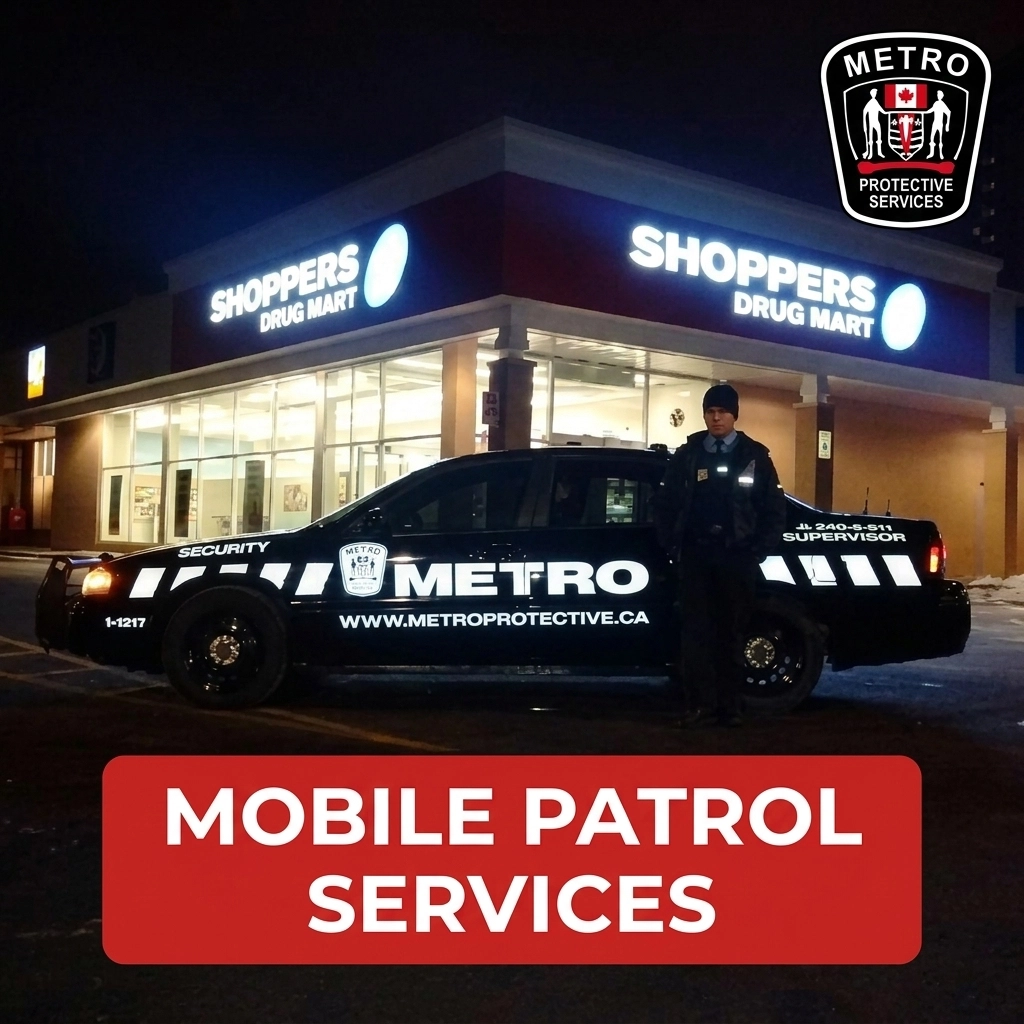
Mobile patrol services Toronto clients use can extend coverage across large surface lots, remote parking areas, perimeter roads, loading zones, and multiple garage levels. A marked patrol vehicle creates a visible presence while allowing officers to respond quickly to calls and changing conditions.
Patrol routes should vary in timing and direction while still covering documented checkpoints. Officers should inspect lighting, doors, emergency access routes, stairwells, elevators, accessible spaces, and isolated areas. Patrol findings should be recorded electronically and reviewed by supervisors.
24/7 Dispatch Coordination
A 24/7 dispatch centre connects on-site guards, mobile patrol units, property management, and emergency services. Dispatch personnel can receive calls, prioritize incidents, coordinate additional resources, contact supervisors, and maintain a clear communication record.
This is especially important when a mall has multiple buildings, entrances, garages, or tenant operating schedules. Dispatch coordination reduces delays and ensures that incidents are directed to the appropriate response level.

6. Coordinate Security With Mall Tenants
Mall security is most effective when tenants understand how to request assistance and report concerns. Property managers should establish a consistent communication process for retailers, restaurants, entertainment venues, maintenance teams, and delivery personnel.
Tenant coordination should address:
- After-hours access and employee parking
- Delivery and loading schedules
- Procedures for reporting suspicious activity
- Customer evacuation or emergency assistance
- Retail theft incidents that extend into parking areas
- Lost children, vulnerable persons, and welfare concerns
- Vehicle damage or customer complaints
- Special events and promotional traffic plans
Regular meetings with tenants can help identify recurring problems and adjust security deployment. Electronic incident reports should include the location, time, nature of the incident, response actions, involved parties where appropriate, and follow-up requirements. Trend information can then support practical changes to staffing, patrol routes, lighting, signage, or access control.
Practical Mall Parking Security Checklist
Property managers can use the following checklist when reviewing their current program:
- Are parking lots, garages, ramps, stairs, and walkways adequately illuminated?
- Are dark spots and damaged fixtures reported and corrected promptly?
- Are pedestrian routes clearly marked and separated from vehicle lanes?
- Are accessible spaces, access aisles, and curb ramps unobstructed?
- Are fire routes, hydrants, loading zones, and emergency lanes kept clear?
- Are stairwells, elevators, and remote garage levels included in patrols?
- Are public, employee, contractor, and restricted areas clearly identified?
- Are parking enforcement procedures written, consistent, and documented?
- Are static guards deployed during high-demand periods?
- Are mobile patrol routes varied and documented?
- Is dispatch available to coordinate responses at all times?
- Do tenants know how and when to contact security?
- Are incident reports reviewed for recurring patterns?
- Are patrol duties adjusted based on current risks and incident trends?
Mall Security Toronto Services From Metro Protective Services
Metro Protective Services provides integrated security guard services Toronto property managers can use to protect shopping malls, plazas, parking facilities, and commercial properties across the GTA.
Our services can include static security guards, entrance and garage monitoring, mobile patrol and parking enforcement, dispatch coordination, tenant support, incident response, access control, and detailed electronic reporting. Since 2000, our team has helped commercial clients establish practical security programs designed around their properties, operating requirements, and risk profile.
A parking security plan should be visible, responsive, and accountable. Contact Metro Protective Services to discuss coverage for your mall, parking lot, or parking garage.
Need Help? Chat with us or call 416-240-0911 to request a consultation.
Recent Posts
- Why Real-Time GPS Reporting Can Improve Security Service Oversight in Toronto
- How to Choose the Best Loss Prevention Services in Toronto
- Looking for Security Guard Services in Toronto? Ten Things to Know
Reference
For current City of Toronto information regarding parking lot and garage maintenance, lighting, and property standards, review the City of Toronto Parking Lots & Garages guidance.

