

-
info@Metroprotective.ca
Send Email
-
Toronto – Hamilton – London – Windsor
Metro Protective Services
Tel: 416-240-0911
Confidentiality Guaranteed
Tel: 416-240-0911
Confidentiality Guaranteed
26
Aug
Aug
Comprehensive Security Guard and Property Protection Services in Toronto and the GTA
Home > Blog > Construction Site Security > Comprehensive Security Guard and Property Protection Services in Toronto and the GTA
Published on: August 25, 2026
Category: Construction Site Security
Tags: Construction Site Security, Security Guard Services Toronto, Property Protection, Mobile Patrol Services Toronto, Access Control, Fire Watch
Construction sites across Toronto and the GTA contain valuable equipment, materials, tools, fuel, temporary infrastructure, and unfinished structures. These assets can be exposed to theft, vandalism, trespassing, fire hazards, and unauthorized activity, particularly during evenings, weekends, holidays, and construction shutdowns.
For developers, property managers, general contractors, and business owners, construction site security must be planned around the project’s current phase and changing risk profile. A vacant excavation site requires a different approach from an enclosed high-rise development, equipment yard, or site preparing for occupancy.
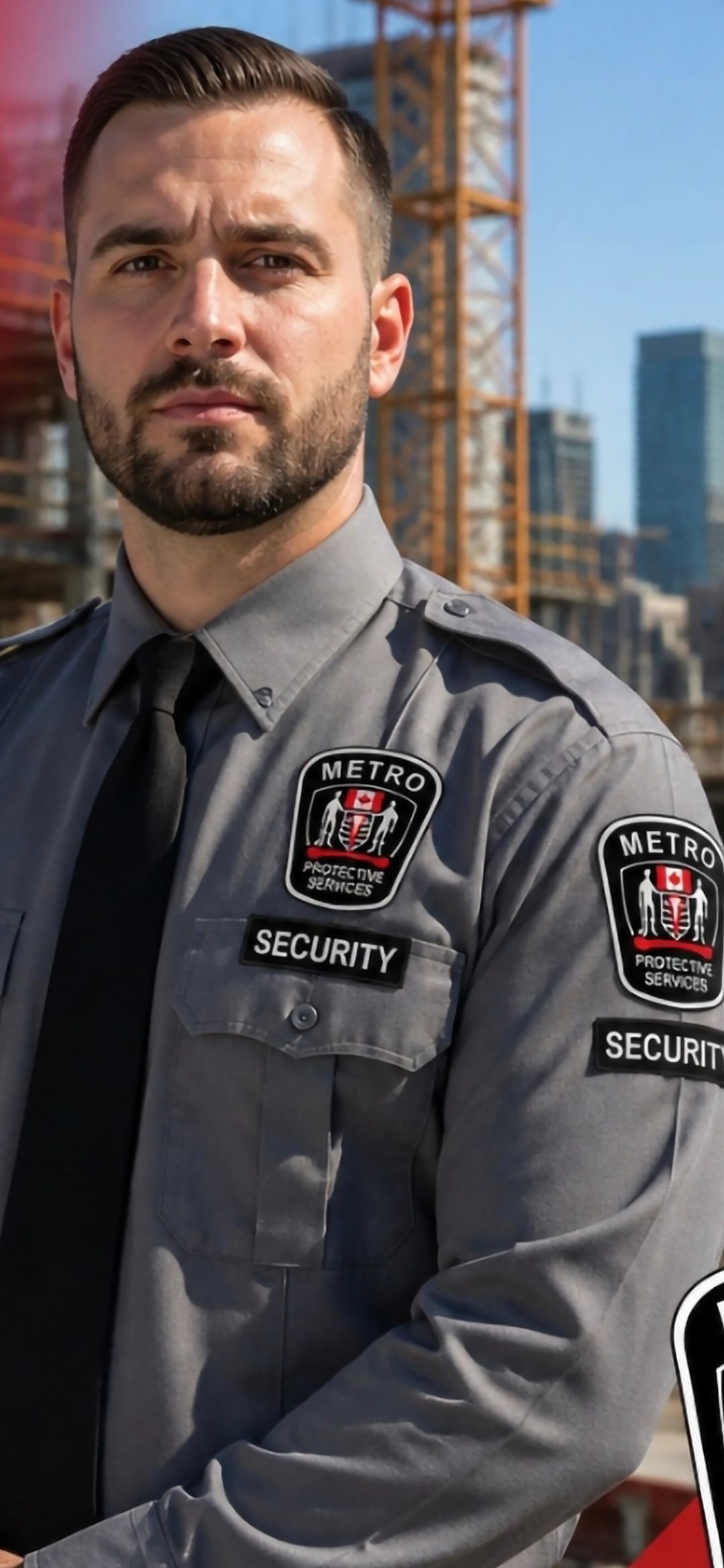
Metro Protective Services provides comprehensive construction site security services throughout Toronto and the GTA. Since 2000, our experienced team has supported builders, developers, property managers, and commercial clients with licensed security personnel, mobile patrol support, 24/7 dispatch centre coordination, GPS check-ins, electronic reporting, and practical property protection strategies.
Why Construction Sites Require Dedicated Security
Construction sites are dynamic environments. Access points may change as work progresses, fencing can be moved or damaged, and new storage areas may be created as materials arrive. Security planning must therefore be reviewed regularly rather than treated as a one-time installation.
Common risks include:
- Theft of copper, tools, generators, fuel, and construction equipment
- Unauthorized entry by trespassers, curious members of the public, or unapproved contractors
- Vandalism to machinery, hoarding, temporary structures, and completed work
- Unlogged deliveries or improper removal of materials
- Fire risks involving hot work, combustible materials, temporary power, or impaired fire systems
- Liability concerns arising from unauthorized persons entering an active worksite
- Security gaps when a project is closed overnight or during a holiday shutdown
A professional security presence provides more than a visible deterrent. Guards can verify access, identify developing issues, document site conditions, coordinate responses, and ensure that concerns reach the appropriate site contact without unnecessary delay.
Core Construction Site Security Services
Gate Access Control and Site Entry Management
The primary gate is often the most important control point on a construction site. A trained security guard can manage entry and exit procedures for workers, subcontractors, suppliers, visitors, and delivery vehicles.
Effective gate procedures may include:
- Verifying worker identification and contractor affiliation
- Confirming that visitors have a legitimate business purpose
- Checking visitor authorization with the site supervisor or project manager
- Maintaining sign-in and sign-out records
- Issuing temporary visitor credentials where appropriate
- Confirming delivery schedules, purchase orders, packing slips, and drop-off locations
- Preventing unauthorized vehicles from entering the property
- Monitoring for tailgating through vehicle or pedestrian gates
Where practical, access should be consolidated through a controlled entrance. The guard can also coordinate with site management when shift schedules, contractor lists, delivery windows, or gate locations change.
Contractor and Visitor Verification
Construction sites may have several subcontractors working simultaneously. Without a consistent verification process, it can be difficult to determine who is authorized to be on the property at a particular time.
Security personnel can work from daily or shift-based crew lists supplied by management. Visitors may be required to provide identification, state the purpose of their visit, and confirm the person or company they are meeting. Depending on the site layout and hazards, visitors may also require an escort.
This process supports both security and operational accountability. If an incident occurs, management has a documented record of who was present, when they arrived, and when they departed.
Perimeter Patrols and Property Protection
Perimeter patrols are designed to identify vulnerabilities before they become losses. Patrol officers can inspect fencing, hoarding, gates, locks, lighting, storage compounds, trailers, fuel tanks, equipment areas, and building access points.
Patrols should be varied and documented rather than performed on a predictable route at the same time every night. Guards may also check for:
- Breaches, gaps, or climbing points along the perimeter
- Damaged locks, gates, or temporary barriers
- Unsecured tools, materials, or machinery
- Suspicious activity near storage areas
- Water leaks, smoke, unusual odours, or other maintenance concerns
- Evidence of attempted trespassing or vandalism
A visible guard presence can discourage opportunistic activity, while detailed observations give project managers useful information for correcting site vulnerabilities.

Delivery Logging and Material Control
Uncontrolled deliveries can create both security and operational problems. Every delivery should be matched to an expected supplier, vehicle, driver, purchase order, or authorized site contact whenever possible.
A construction security guard can record:
- Delivery company and driver information
- Vehicle identification
- Arrival and departure times
- Material type and quantity, where applicable
- Delivery destination
- Name of the person accepting the delivery
- Any irregularities, damage, or discrepancies
Departure procedures are also important. Vehicles leaving with equipment or materials may require confirmation from the site supervisor or documentation showing that removal has been authorized.
High-value tools and equipment should be tagged, registered, and stored in locked compounds or containers. Security personnel can help enforce key-control procedures and report items that are left unsecured after working hours.
After-Hours Security for Active and Vacant Sites
Security exposure often increases when construction crews leave for the day. A site may be quiet, poorly illuminated, and easy to approach from surrounding roads, laneways, or adjacent properties.
After-hours protection can include a combination of:
- Scheduled on-site security guards
- Overnight gate control
- Interior and exterior patrols
- Lock and alarm checks
- Equipment-yard inspections
- Randomized mobile patrol visits
- Alarm response and escalation
- Coordination with site supervisors, property managers, police, fire services, or emergency contractors when required
For vacant sites or projects temporarily paused, mobile patrol services Toronto clients rely on can provide a practical layer of protection without requiring a full-time guard at every location.
Fire Watch Coordination
Construction projects may require fire watch coordination when fire alarm or sprinkler systems are not operational, when hot work is taking place, or when combustible materials and temporary systems create elevated risk.
Fire watch duties should be based on the project’s fire-safety plan and the requirements of the responsible authorities, insurer, contractor, or property owner. Assigned personnel may conduct continuous or frequent inspections of hot-work areas, temporary power rooms, fuel storage, material staging areas, and other designated zones.
Documentation is essential. A fire-watch log should record the time of each inspection, the areas checked, hazards identified, corrective actions taken, and any escalation made. Security personnel can also support emergency access by directing responding services to the correct gate and ensuring that access routes remain clear.

Technology-Supported Accountability
Professional security is strengthened when physical patrols are supported by reliable reporting systems. Metro Protective Services uses the Sky-Guard Monitoring System to support GPS check-ins and electronic reporting.
This technology helps provide:
- Verified patrol activity and checkpoint completion
- Time-stamped observations
- Electronic incident reports
- Photographic documentation where appropriate
- Faster communication with the 24/7 dispatch centre
- Daily electronic reports for client review
- A clearer record for management, investigations, and insurance documentation
Technology does not replace trained security personnel. It gives project stakeholders better visibility into what occurred on the property and helps supervisors identify missed checkpoints, changing conditions, or incidents requiring follow-up.
How to Evaluate Construction Site Security Providers
Before hiring a security company, property managers and contractors should confirm that the provider can support the site’s operational requirements. Use the following checklist:
- Is the company licensed to provide security services in Ontario?
- Is it fully insured and able to provide documentation on request?
- Are guards trained for construction environments, emergency response, reporting, and access control?
- Can the provider offer both on-site guards and mobile patrol support?
- Is there 24/7 dispatch centre coordination?
- Are GPS check-ins and electronic reports available?
- Can the security plan adapt as the project moves from excavation to structure, enclosure, fit-out, and occupancy?
- How are missed shifts, incidents, alarms, and emergencies escalated?
- Can the company maintain delivery, contractor, visitor, and patrol records?
- Does management conduct supervisory inspections and performance reviews?
- Can the provider coordinate fire watch requirements with the responsible project stakeholders?
- Are services available across the Toronto and GTA area?
Metro Protective Services is licensed by Ontario’s Ministry of the Solicitor General and fully insured. Our guards are trained, uniformed, and supported by supervisors and 24/7 operational coordination.

A Construction Security Plan Should Change with the Project
A construction site is not static. New floors, temporary entrances, material compounds, scaffolding, hoists, completed areas, and occupancy preparations can all change the security profile.
For this reason, security plans should be reviewed when:
- A new gate or delivery entrance opens
- High-value materials arrive
- Equipment is relocated
- Perimeter fencing or hoarding changes
- The site enters a holiday or overnight shutdown
- Fire protection systems are impaired or commissioned
- Portions of the property become enclosed or occupied
- Theft, trespassing, vandalism, or safety concerns are reported
A responsive security provider should communicate with site management and adjust patrol routes, access procedures, staffing levels, and reporting requirements as conditions evolve.
Need Help? Chat with Us
Metro Protective Services provides security guard services Toronto developers, contractors, property managers, and business owners can use to protect active developments, vacant sites, equipment yards, and material storage areas.
We can help develop a site-specific scope covering gate access control, contractor and visitor verification, delivery logging, perimeter patrols, after-hours protection, fire watch coordination, mobile patrol services, and electronic reporting.
Submit a request for a quote or call 416-240-0911 to discuss your construction site security requirements.
Recent Posts
- How to Choose the Best Security Guard Services Toronto
- The Property Manager’s Guide to Security Guard Services in Toronto
- Comprehensive Security Guard and Property Protection Services in Toronto and the GTA
Customer Support & Inquiries
For immediate assistance, contact Metro Protective Services at 416-240-0911 or chat with us on WhatsApp. Our team is available to help identify a practical protection plan for your Toronto or GTA construction property.

