

-
info@Metroprotective.ca
Send Email
-
Toronto – Hamilton – London – Windsor
Metro Protective Services
Tel: 416-240-0911
Confidentiality Guaranteed
Tel: 416-240-0911
Confidentiality Guaranteed
24
Oct
Oct
Comprehensive Security Guard and Property Protection Services in Toronto and the GTA: Mobile Patrol Services Toronto Property Managers Trust When the Alarm Sounds This Winter
Blog > Security Guard Services Toronto
Date: October 24, 2026
Series Entry: 22 of Comprehensive Security Guard and Property Protection Services in Toronto and the GTA
Category: Mobile Patrol
For property managers, business owners and residents, the fall time change is a timely reminder to review alarm procedures and after-hours coverage. On November 1, 2026, clocks fall back, and the repeated hour can complicate schedules and event timestamps. When an alarm sounds, clear verification and a defined response plan matter. Mobile patrol services Toronto properties use can provide an on-site check, supported by security guard services Toronto businesses and communities can coordinate with their monitoring station.
Why Alarm Season Starts the Night the Clocks Fall Back
The time change does not trigger a new Toronto Police Service alarm policy, and there is no official designation of the first hour after the clocks change as the busiest alarm hour. It is, however, a useful seasonal readiness checkpoint. The earlier sunset by the clock and the approaching winter period mean many commercial sites are unoccupied through longer evening and overnight stretches.
At 2 a.m. on November 1, clocks return to 1 a.m., repeating that hour. Businesses should check that alarm panels, monitoring software, access-control schedules and incident logs record the transition as expected. A discrepancy in timestamps can make it harder to compare a panel event with camera footage or staff reports.
False alarms also warrant attention year-round. Reviewing contact lists, entry procedures and system maintenance before winter can help limit avoidable activations and clarify who is responsible for checking a site when an alarm occurs.
What Toronto Police Require Before They Respond to an Alarm
The Toronto Police Service, Understanding Alarm Response states that burglar alarm activations must be verified before police dispatch is requested. Verification may include video confirmation, audio confirmation, multiple zone activations, or confirmation from an eyewitness or witness. A single unverified burglar-alarm signal is not, by itself, sufficient for police dispatch under the policy.
Panic, hold-up, duress and emergency-button alarms are exempt from the verification requirement and are treated as high priority. Alarm users should confirm with their monitoring provider how each alarm type is identified and what happens after activation.
A police review cited when the policy was introduced found that 97 per cent of alarm events in 2016 were false alarms. That figure is historical context, not a measure of current alarm activity. It helps explain why verification procedures matter: they support the distinction between an unconfirmed signal and information indicating a real incident.
The Real Cost of a False Alarm for GTA Property Owners
Under Toronto Police Services Board By-law 110, an alarm business whose reported activation is determined to be false pays a fee of $130 plus applicable taxes. The fee is invoiced to the alarm business.
Repeated false alarms can have a further consequence. According to the Toronto Police Service, an alarm system that generates four false alarm events within a 365-day period can face police response suspension for 365 days. Property managers should review the current requirements with their alarm provider and avoid assuming police will attend an unverified activation.
The financial fee is only one consideration. A false alarm can require staff callouts, interrupt operations and make it harder to distinguish a later genuine event. If a real incident is not promptly identified, delays can also affect damage assessment and communication with tenants, employees or service providers. A clear escalation plan helps reduce uncertainty, though it cannot eliminate every risk.
How Mobile Patrol Services Toronto Properties Use Close the Verification Gap
When an alarm activates, a mobile patrol officer can attend, check the exterior and, where authorized, inspect designated interior areas. The officer reports observable conditions, such as damage, an open door or no visible sign of forced entry, to the dispatch centre and monitoring station. Those observations support the verification process; they do not replace the alarm-monitoring station’s obligation to meet Toronto Police Service criteria before requesting police attendance.
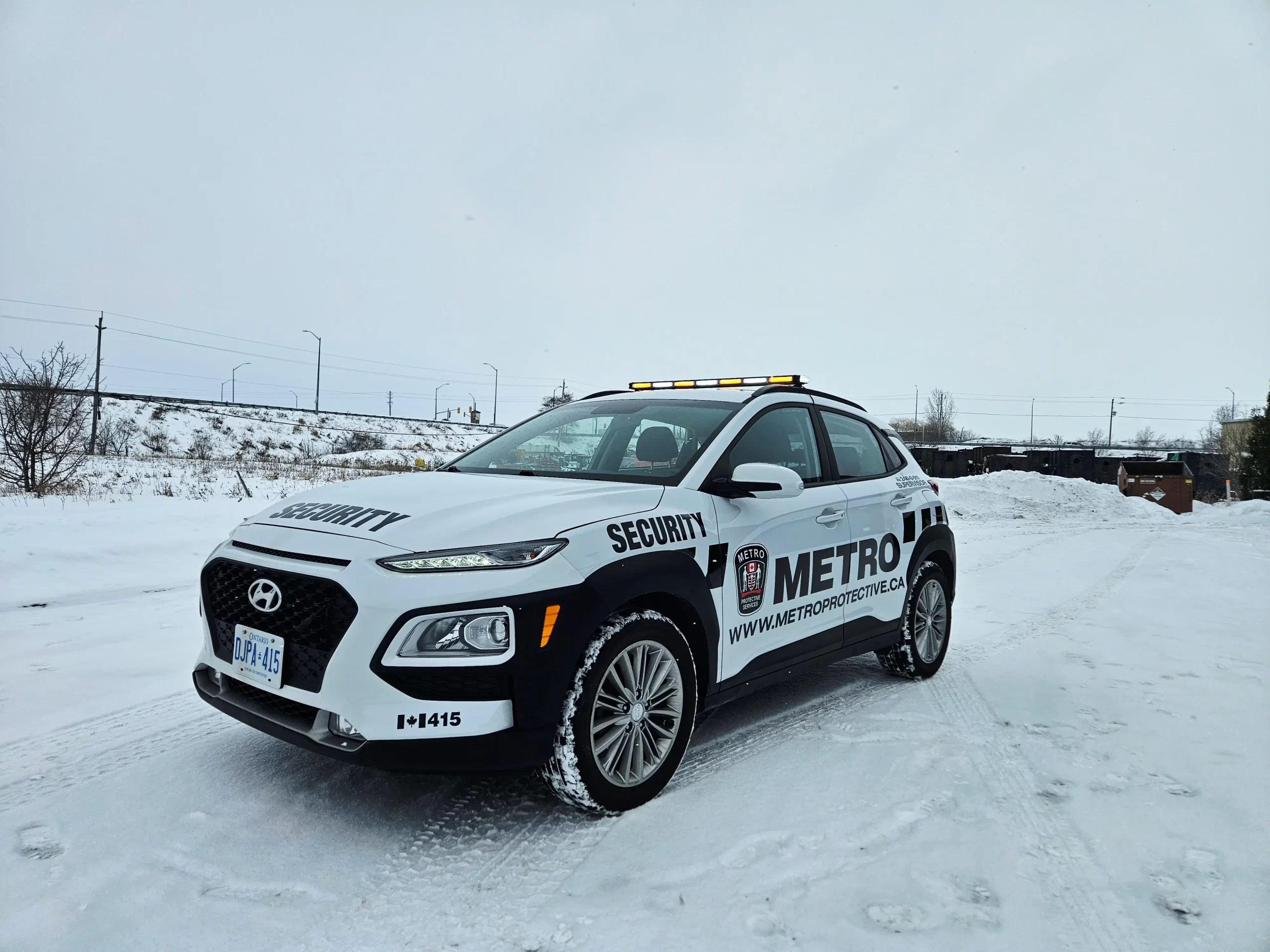
Metro Protective Services’ 24/7 dispatch centre coordinates patrol assignments and communications with the monitoring station. When an incident is confirmed, dispatch can relay relevant information to the appropriate parties and support further escalation. The mobile patrol services Toronto property managers can arrange can also include scheduled checks, GPS-verified patrol activity and electronic reporting through the Sky-Guard Monitoring System.

Sky-Guard GPS check-ins help document a unit’s patrol activity, while electronic reports provide property managers with a record of observations and actions taken. Daily reporting can support internal follow-up and help identify recurring access or maintenance issues. Reports and documentation do not guarantee any particular police or insurance outcome.

What Overnight Commercial Break-Ins Look Like Right Now in the GTA
A recent Peel Regional Police investigation offers a specific example of overnight commercial break-ins in the region. In a release dated October 16, 2026, police said a Brampton man was arrested and charged in connection with 20 commercial break-and-enters over roughly two months. Incidents were primarily overnight in the downtown Brampton core and the Queen Street East and Kennedy Road area. Police reported that businesses included restaurants, retail stores and other commercial establishments; entry was gained by smashing front glass doors or windows with a rock or brick, and cash registers and safes were targeted. Several businesses sustained significant damage.
Peel Regional Police reported that video surveillance played a key role in identifying and connecting the accused to the incidents. Charges are allegations and are not findings of guilt. The release also reported a 45 per cent decrease in commercial break-and-enter violations, from 1,142 in 2025 to 628 in 2026 at the time of publication, and plans to expand its BEAR Unit. These figures describe the police release, not a forecast or proof that any one measure caused the change.
Cameras and documented patrols serve complementary purposes: cameras may capture activity, while a patrol can check a site and record conditions at the time of attendance. Together, they can give property teams clearer information for follow-up.
Build Your Alarm Response Plan Before the First Snow Flies
Use this checklist to review your property’s procedures:
- Confirm the monitoring station’s call tree, current keyholder list and escalation contacts.
- Pre-authorize a patrol response to alarm activations, including access instructions and limits on any interior check.
- Define escalation steps with the 24/7 dispatch centre, including how observations will be relayed to the monitoring station.
- Schedule lock and lockup checks, as well as after-hours unlock services where required.
- Map patrol priorities, including gates, loading docks, cash areas, service entrances and parkades.
- Review winter route hazards, such as snow-covered walkways, blocked access points and icy ramps.
- Confirm that daily electronic reports reach the property manager and other designated contacts.
- Link active job sites with construction site security services, and consider residential security Toronto needs alongside concierge security services for occupied buildings.
Need Help? Chat with Us
Preparing for winter alarms can involve several providers and property stakeholders. If you have a question about patrol coverage or reporting, we are glad to help. Leave a comment or Need Help? Chat with us on WhatsApp. You can also request a quote.
Metro Protective Services has served Toronto and the GTA since 2000, with 24/7 dispatch coordination. Interested in joining our team? Visit Careers.
Recent Posts
- Construction Site Security Services That Winterize GTA Job Sites Against Theft Before the First Snowfall
- Retail Loss Prevention That Gets GTA Stores Black Friday Ready: From Doorbuster Crowds to Organized Retail Crime
Tags: Mobile Patrol Services Toronto, Mobile Patrol, Security Guard Services Toronto, Alarm Response, Verified Alarm Response, False Alarms, Sky-Guard Monitoring System, GTA Property Protection, Construction Site Security Services, Concierge Security Services, Residential Security Toronto

