

-
info@Metroprotective.ca
Send Email
-
Toronto – Hamilton – London – Windsor
Metro Protective Services
Tel: 416-240-0911
Confidentiality Guaranteed
Tel: 416-240-0911
Confidentiality Guaranteed
14
Oct
Oct
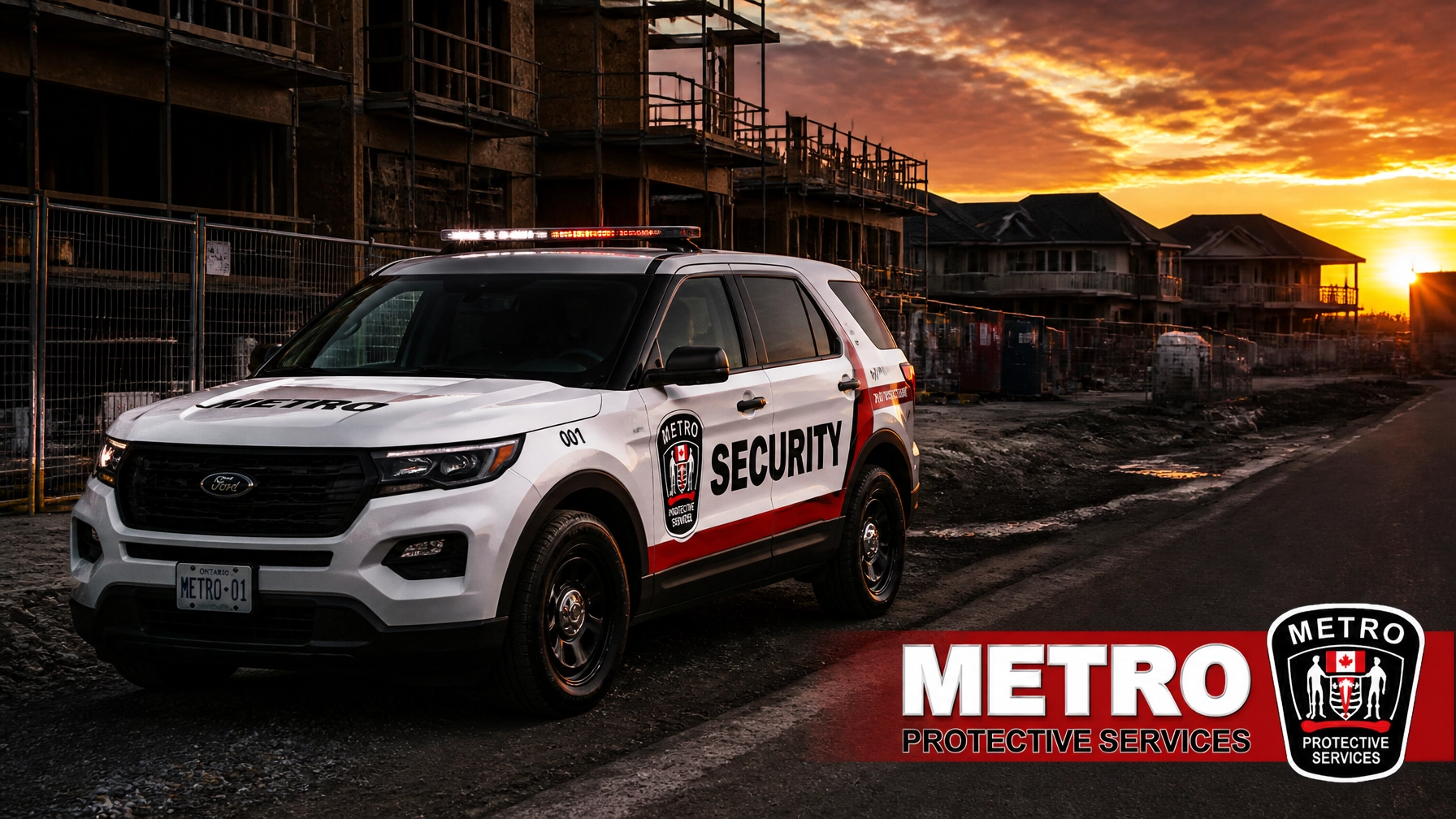
Comprehensive Security Guard and Property Protection Services in Toronto and the GTA: Construction Site Security Services That Protect GTA Job Sites as Daylight Shrinks, Weather Turns, and the Winter Build Push Begins
Breadcrumb: Home › Blog › Construction Security
Date: Wednesday, October 14, 2026
Series: Comprehensive Security Guard and Property Protection Services in Toronto and the GTA, Entry 15
Category: Construction Security | Property Protection | Mobile Patrol
The post-Thanksgiving weeks bring a shift in operating conditions for construction projects across Toronto and the GTA. Daylight fades earlier, temperatures fall, rain and dampness alter site surfaces, and crews continue pushing toward seasonal milestones. Developers and general contractors are also beginning to plan holiday shutdowns, protect exposed work, and prepare sites for winter.
These changes affect more than schedules. They alter how a site is accessed, monitored, and secured after hours. Open perimeters may change as hoarding and tarps are installed. Condensation, mud, and temporary lighting can limit visibility or affect routes. Materials and equipment may be moved to new laydown areas as work progresses. A security plan that matched the site in September may no longer fit it in mid-October.
For builders, the aim is to adapt protection to current site conditions. Well-planned construction site security services can help deter theft and vandalism, identify access issues, and provide reliable records of patrol activity as the project enters a more demanding season.
Why fall conditions change the security picture
Reduced daylight creates longer periods of darkness during evening and overnight shifts. This can make it easier for an intruder to approach unnoticed, particularly where lighting is uneven or temporary offices and stored materials create blind spots. Rain and condensation may also affect visibility through windows, camera housings, or temporary coverings. Mud and changing site layouts can make it harder to follow a consistent patrol route.
Perimeters deserve particular attention during this period. Hoarding work, delivery access, scaffold changes, and winter weather preparation can create gaps or leave gates open longer than planned. Tarps and temporary enclosures may conceal activity from the street or obscure views from fixed cameras. A site should be checked again whenever the layout, work schedule, or access arrangements change, not only on a fixed calendar date.

Protect tools, wire, fuel, and laydown areas
As the fall build push continues, construction sites may hold a mix of portable tools, copper wire, fuel, small equipment, and materials awaiting installation. These items can be particularly vulnerable when left in open staging areas or unsecured trailers overnight. A theft can mean more than replacement costs: missing equipment may interrupt a trade’s work or delay other project activities.
A practical approach begins with knowing what is on site and where it is stored. Project teams can keep current asset records, including identifying information and photographs for higher-value equipment, and review inventories as materials arrive, move, or are installed. Store tools and wire in locked, access-controlled containers where practicable. Secure fuel storage and equipment, remove keys, and avoid placing valuable items where they are easily visible from the perimeter.
Laydown yards need planned oversight too. Define approved storage zones, restrict access to delivery and loading areas, and make sure those locations are included in patrol instructions. When a material staging area moves, update the site map and security post orders. A patrol focused only on the entrance can miss activity at the far end of a large yard.
Keep access points and surrounding areas in view
A fence is only one part of perimeter security. Gates, temporary openings, damaged hoarding, and access routes shared with subcontractors or delivery vehicles all need clear procedures. Confirm who may enter after hours, how access is authorized, and who is responsible for securing each gate at shift end. Where practical, reduce unnecessary entry points and maintain a current record of expected after-hours work.
A visible security presence can also help discourage trespass and vandalism. However, security personnel should not be expected to enter unstable areas or take on construction safety duties. Their role is to observe, report, follow site-specific instructions, and escalate concerns through the agreed response process.
This matters especially on urban projects beside occupied homes, retail spaces, or active public routes. Coordinating site security with neighbouring property managers can help address shared concerns such as unauthorized access, damage near the hoarding, or unsafe activity along the boundary. For residential developments, security planning may also connect with broader residential security Toronto needs as buildings move from construction toward occupancy.

Recheck the site before weather and holiday shutdowns
Fall protection is not a one-time task. After heavy rain, high winds, or a significant layout change, project teams should revisit gates, fences, lighting, storage locations, and patrol access. Mud and standing water can change the safe route across a site. Tarps and temporary coverings may loosen or shift, while hoarding work can expose a previously secured boundary. Security staff should report observed issues through the site’s escalation process; repairs and safety decisions remain with the appropriate site personnel.
Before planned holiday closures, agree on a written close-down process with the general contractor, subcontractors, and security provider. Confirm which trades are scheduled to work, who may authorize entry, and how deliveries or emergency access will be managed. Secure or relocate portable assets, confirm equipment is immobilized, verify locks and alarms, and ensure that temporary power and lighting arrangements are understood. Set a process for checking the site after severe weather and for promptly reporting any breach or damage.
Ontario’s Construction Projects regulation sets requirements and duties for construction projects. Security patrols can complement a site’s procedures, but they do not replace the constructor’s or employer’s responsibilities for health and safety.
Build a useful record through documented patrols
When security activity is recorded consistently, site managers have more than a verbal update to rely on. Patrol records can note when checks took place, which locations were inspected, the condition of gates and storage areas, lighting or access concerns, and any action taken. GPS check-ins and electronic reporting give the client a clearer view of patrol completion and exceptions.
Metro Protective Services has served Toronto and the GTA since 2000. Our teams coordinate through a 24/7 dispatch centre, with coverage options that include professional security guards, mobile patrol services Toronto clients can schedule for site checks, and parking enforcement where needed. The Sky-Guard Monitoring System supports GPS check-ins and daily electronic reports, giving project contacts documented patrol information to review.
Accurate records can also help a builder organize the facts if an incident occurs. Insurers may require prompt notice and supporting documents under the terms of a specific policy. The Insurance Bureau of Canada’s claims guidance recommends gathering relevant records and evidence when preparing a claim. Patrol reports are one piece of documentation; they do not guarantee coverage or replace policy requirements. Project teams should confirm notice deadlines and security conditions directly with their broker or insurer.
Match coverage to the site’s current risk
Not every project requires the same combination of coverage. A compact site with controlled access may need scheduled or variable-time patrols and a defined alarm escalation process. A larger site with valuable materials, multiple entry points, or a planned shutdown may benefit from more frequent checks or an on-site guard presence. The right arrangement depends on the site’s layout, hours, assets, neighbour conditions, and recent incidents.
A review with a security provider can identify where patrols should focus and how concerns will be communicated after hours. Metro’s construction security services are developed around the project’s operational requirements, while our broader security services include mobile patrol and parking enforcement options across the GTA.
As the season advances, make security part of the project’s changing-site review: update the perimeter map, confirm access responsibilities, protect high-value materials, and plan for the holiday schedule. Regular communication between the contractor, property manager, and security team makes it easier to respond as work areas and conditions change.
Need help reviewing coverage for a Toronto or GTA project? Chat with us or submit a request for a quote. Metro Protective Services can discuss site-specific guard and patrol options and provide reporting that keeps your team informed.
Recent Posts
- Concierge security services for residential lobbies and commercial front desks
- The rapid response network: mobile patrol for GTA logistics security
Tags: Construction Site Security, Security Guard Services Toronto, GTA Construction, Mobile Patrol, Property Protection, Winter Site Preparation
Comments: Have a question about securing a construction site through fall and winter? Please leave a comment or contact our team. We will be pleased to help.

